7 Ways to Instill Discipline in Your Child
It feels like you’ve tried everything, doesn’t it?
You’ve had the talks. You’ve set the rules. You’ve taken away the tablet for the thousandth time. Yet, you’re still getting calls from school, still refereeing sibling squabbles that sound more like a WWE match, and still battling over the same things every single evening. That feeling of, “What am I doing wrong?” starts to creep in. I see it on the faces of parents I talk to every day right here in our Troy community. You’re not alone, and you’re definitely not failing.
Here’s the thing: teaching discipline isn’t about being a drill sergeant. It’s about being a coach. It’s not about punishment; it’s about building skills. And let’s be honest, it’s harder than ever. Our kids are growing up in a world of instant everything—instant entertainment on screens, packed schedules that leave no room to breathe, and a constant flood of information that can overwhelm their developing minds. They often lack the unstructured downtime where they used to learn to regulate themselves. The result? Kids who are more impulsive, less focused, and quicker to melt down.
For years, I've worked directly with children ages 4 to 12 and their families. I've seen the struggles, but I've also seen what works. It's not about a magic wand, but about consistent, small actions that build a foundation of self-control and respect. Here are seven practical ways to instill discipline in your child that you can start using today.
RELATED: Top 10 Reasons Why Kids Don't Listen to Their Parents
1. Reframe “Discipline” as “Training”
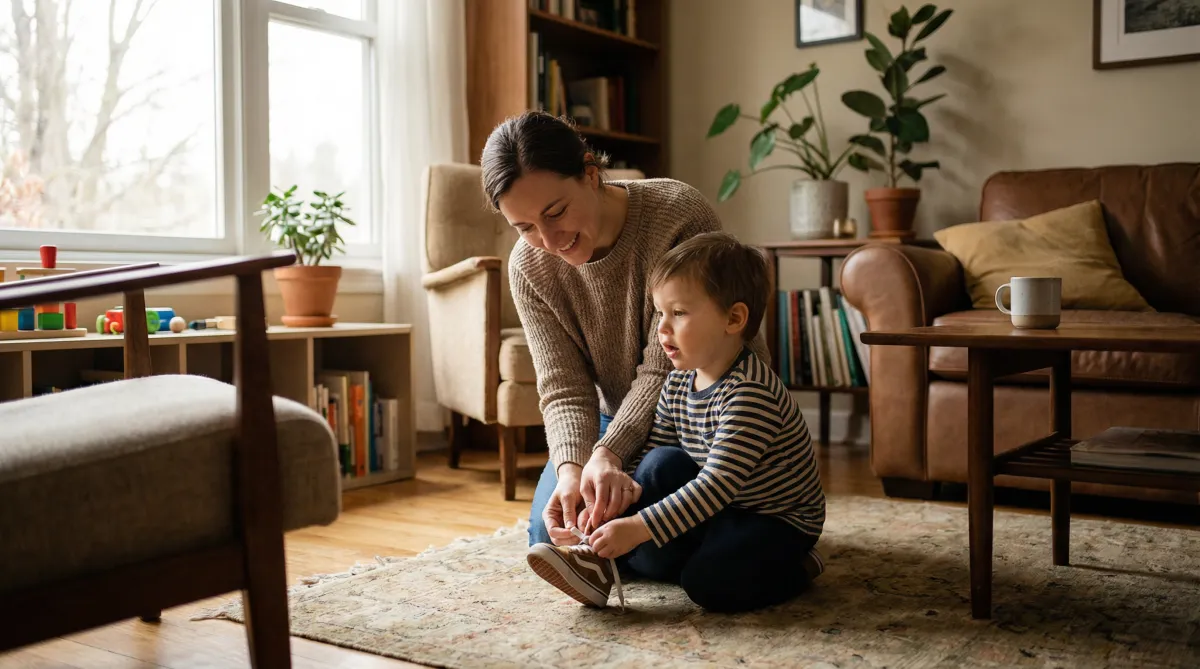
The first shift is in our own mindset. When we hear “discipline,” we often think of consequences. But the word’s origin is about teaching and learning. Think of yourself as your child’s coach for life skills. When a soccer coach sees a player struggling to pass the ball, they don’t just yell at them; they pull them aside and show them the right technique. They drill it. They practice.
When your child interrupts you for the fifth time while you're on the phone, instead of just saying, "Stop interrupting!" you can later say, "Hey, when I'm on the phone, I need you to practice waiting patiently. Let's try it. I'm going to pretend to be on the phone, and you can place your hand on my arm to signal you need me. When I'm done, I'll turn to you." It may feel a little silly at first, but you're giving them a concrete tool to use rather than just a command to follow. Kids aren't little adults. They need practice, repetition, and guidance.

2. Create Predictable Rhythms and Routines
Kids thrive on structure. They might not act like it, but knowing what’s coming next gives them a sense of safety and control. When their world is predictable, they have fewer reasons to act out. This doesn’t mean you need a minute-by-minute schedule, but having consistent “rhythms” for your day makes a world of difference.
•Morning Rhythm: Wake up, get dressed, eat breakfast, brush teeth. The order is always the same.
•After-School Rhythm: Snack, 20 minutes of quiet time (no screens!), then homework.
•Evening Rhythm: Tidy up toys, bath, read a book, bedtime.
These routines take the guesswork out of the day. You're no longer the bad guy nagging them to get dressed; it's just what we do after breakfast. I worked with a family whose mornings were pure chaos. We created a simple visual chart with pictures for their six-year-old. It wasn't instant perfection, but within a few weeks, the morning battles were gone. The chart became the boss, not mom and dad.
The key is consistency. Children need to see the pattern repeatedly before it becomes automatic. Yes, it takes effort up front, but the payoff is significant.
3. The Power of the “Pause”
Self-discipline is fundamentally about the ability to pause between an impulse and an action. This is a skill we have to teach. When your child is getting frustrated with a toy or angry at their sibling, help them learn to pause.Get down on their level and say, "You look really frustrated. Let's take a break for a minute." Don't solve the problem for them. Just create a space for them to cool down. You can even create a "calm-down corner" with a comfy pillow and a few books. It's not a time-out or a punishment, but a place to go to get your brain back online.
I've seen this work wonders with kids who are quick to explode. One parent I worked with set up a little tent in the corner of the living room with some soft stuffed animals and a feelings chart. Her eight-year-old son began using it independently when he felt overwhelmed. That's the goal—teaching them to recognize their own emotional state and take action before they lose control.

4. Connect Before You Correct
When a child is misbehaving, their emotional brain is in the driver’s seat. Logic and reason have left the building. If you come in with a lecture or a consequence right away, you’re just pouring fuel on the fire. The first step is always to connect.
This can be as simple as acknowledging their feeling. "Wow, you are really angry that your brother took your toy." Or, "I can see you're disappointed that we have to leave the park." You're not agreeing with their behavior, but you're showing them that you see them. You're on their team. Once they feel heard, their brain can calm down enough to actually listen to your correction or guidance.
This is especially important for younger kids who don't yet have the vocabulary to express what they're feeling. When you name the emotion for them, you're giving them a tool they can use next time.
RELATED: How Troy Parents Are Helping Ther Kids Build Discipline in 2026
5. Let Natural Consequences Do the Teaching
As parents, we often want to swoop in and save our kids from discomfort. But sometimes, the most powerful lessons come from experiencing the natural outcome of their choices. If they refuse to wear their coat, they will be cold on the way to the car. If they don’t put their toys away, they might not be able to find their favorite one later.
Of course, this only works if the consequence is safe and immediate. But when you can, step back. Instead of nagging, you can say, "Oh, that's a bummer you're cold. We can remember your coat next time." You're not being mean; you're letting life be the teacher. The hardest part? Resisting the urge to rescue them. But discomfort is how they learn.
6. Give Them Responsibility, Not Just Rules
Discipline grows from a sense of purpose and contribution. Give your child meaningful jobs to do around the house. Even a four-year-old can be in charge of putting the napkins on the table for dinner. An eight-year-old can be responsible for feeding the dog every day.
These aren't just chores; they are contributions to the family team. Frame it that way. "It's your job to feed Sparky because we trust you to take care of him." When children feel valued and like contributing members of the family, they are more likely to act in ways that respect the family unit. It builds their sense of competence and self-worth, which are the building blocks of self-discipline.
7. Focus on the “Do” Instead of the “Don’t”
Our brains struggle to process negative commands. If I say, “Don’t think about a pink elephant,” what’s the first thing you do? You think about a pink elephant. It’s the same for kids. When we repeatedly say “Don’t run,” “Don’t yell,” “Don’t leave your shoes there,” the brain hears only “run,” “yell,” “shoes.”
Instead, tell them what you want them to do. "Please use your walking feet." "Talk in your inside voice." "Put your shoes in the basket." This is clearer, more direct, and gives them a positive action to focus on. It's a small shift in language that can have a huge impact.
Building Skills, Not Just Enforcing Rules
Remember, this is a marathon, not a sprint. You will have good days and bad days. The goal isn’t a perfectly behaved child, but a child who is slowly but surely building the skills to manage their emotions, control their impulses, and make respectful choices. Every time you coach them through a tough moment, you help them build those pathways in their brains.
Here in Troy, I see so many parents doing their absolute best. If you’re looking for a way to support this journey, structured activities can be a game-changer. Programs that focus on discipline and respect, such as martial arts, provide kids with a fun, engaging environment to practice these skills outside the home. At Mastery Martial Arts, we build everything we do around coaching and skill-building.
But it all starts at home, with you. Be their coach. Be consistent. And most importantly, be patient—with them, and with yourself. You’ve got this.

