

If you’re searching for practical advice on how to build discipline in kids, you’re not alone. It’s one of the most common struggles parents face today — and it’s getting harder, not easier. Screens, overstimulation, and packed schedules have made it genuinely difficult for children to develop the self-control and focus they need. But the good news is that learning how to build discipline in kids doesn’t require perfection. It requires consistency, the right strategies, and a little patience.
Why Is It So Hard to Build Discipline in Kids Today?
This isn’t about “bad kids” or “bad parents.” It’s about a world that has fundamentally changed. Our children are growing up with a firehose of stimulation from screens, offering instant gratification that real life can’t match. They lack the underlying skills to regulate themselves and stay focused. Understanding how to build discipline in kids starts with recognizing that discipline is a skill — not a personality trait — and it must be taught.
Discipline Is About Building Skills, Not Punishment
True discipline isn’t about control or punishment. It’s about having self-control, resilience, and the ability to do what’s needed, even when it’s hard. That’s a skill that has to be taught and practiced consistently. For more on this, check out this resource on the purpose of discipline from Verywell Family.
3 Low-Effort Strategies to Build Discipline in Kids
Here are three strategies that consistently work when parents ask me how to build discipline in kids at home.
1. The “First/Then” Rule
This is incredibly simple and shockingly effective. Instead of just telling your child what to do, frame it as a sequence: “First, you’re going to put your toys in the bin, then we can watch a show.” It’s not a negotiation; it’s a clear, predictable order of events. Within two weeks of using this consistently, most families see a dramatic reduction in daily battles. It’s one of the most underrated answers to how to build discipline in kids without power struggles.
2. Shrink the Task
When a child says, “I can’t clean my room, it’s too much!” they’re not lying. Don’t say, “Clean your room.” Say, “Let’s just put all the LEGOs in this one box.” This teaches them how to break down overwhelming projects and gives them a quick win that builds confidence. Small wins are the foundation of how to build discipline in kids over the long term.
3. Use a Visual Timer
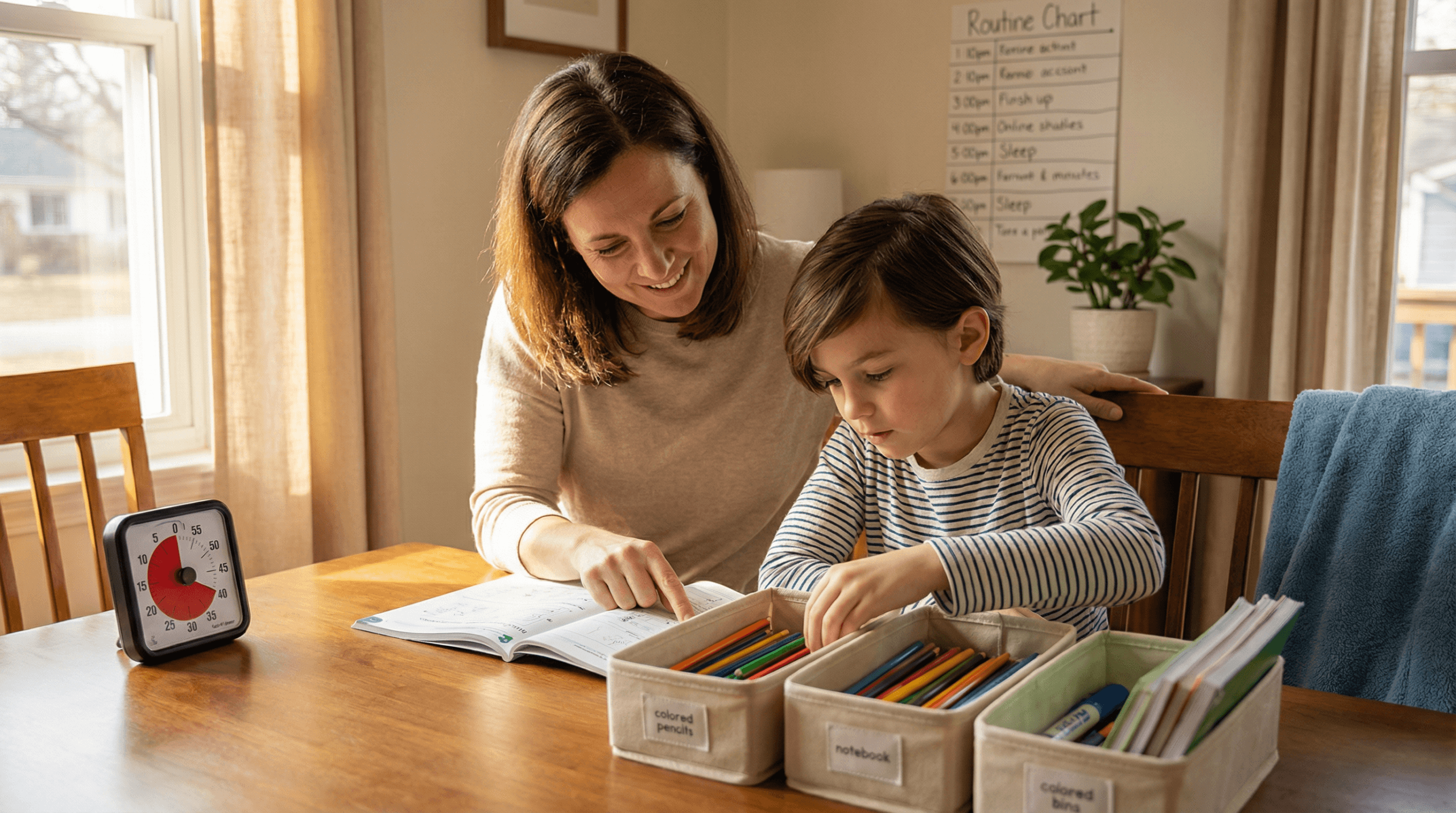
Kids have a terrible sense of time. A visual timer makes time concrete. It’s no longer you being the bad guy; it’s the timer. “When the timer goes off, it’s time to turn off the game.” This externalizes the authority and reduces the power struggle significantly.
RELATED: What are the 10 most common reasons a child will not listen?
Consistency Is the Real Answer to How to Build Discipline in Kids
The key isn’t to be perfect. It’s to be consistent. Every time you hold a boundary, use a “First/Then” statement, or help them shrink a task, you’re making a deposit in their “discipline bank.” It adds up over time. The goal is progress, not a perfectly behaved child overnight.
For many kids, a structured environment outside the home is what really makes these skills click. That’s why programs like our kids karate classes can be so powerful. When they hear the same messages about focus and follow-through from another trusted adult, it reinforces what you’re doing at home and accelerates the process of learning how to build discipline in kids.
If you’re feeling stuck and looking for a way to help your child build these foundational life skills, we invite you to explore Mastery Martial Arts. Come watch a class and see how we help kids build the focus, respect, and discipline that will serve them for a lifetime.