

In This Article
The belief life skill for children may be the single most important thing you help your child develop — and most parents don’t even know it’s a skill that can be taught. “I can’t do it.” If you’ve heard those four words come out of your child’s mouth, you know the feeling. That mix of frustration, helplessness, and a quiet worry that maybe your child is going to struggle more than they should. You want to jump in and fix it. You want to shake them a little and say, “Yes, you can!” But nothing you say seems to land.
Here’s what I’ve learned after working hands-on with hundreds of kids and their families right here in Troy, Michigan: belief is a life skill. It’s not something children are born with or without. It’s something they learn. And like any skill, it can be taught, practiced, and strengthened over time.
That’s what we call the belief life skill for children, and it all starts with three powerful words: YES I CAN.
What Is the Belief Life Skill for Children?
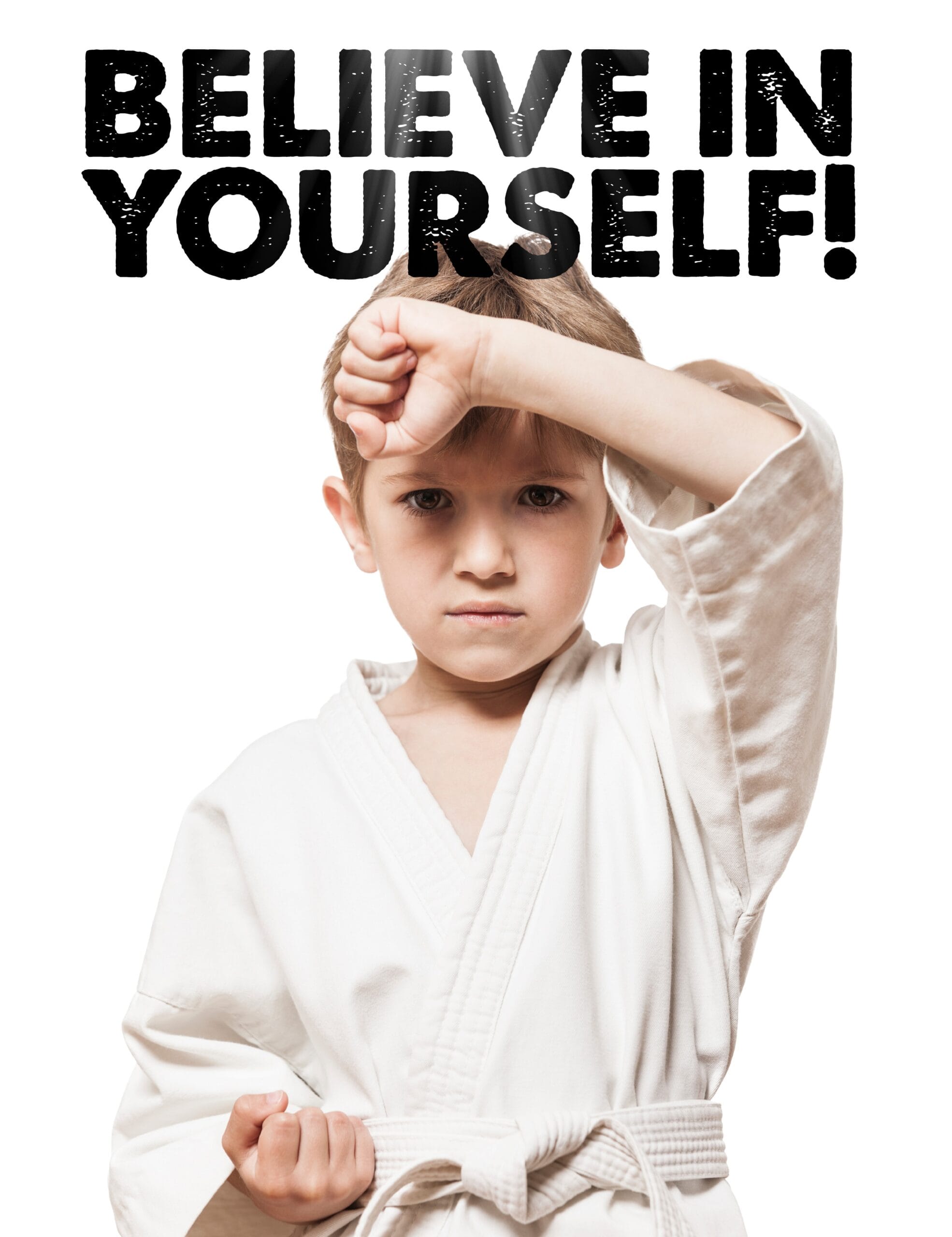
The belief life skill for children is exactly what it sounds like: the ability to believe in yourself. It’s having a YES I CAN attitude, a mindset that says, “Even when this is hard, even when I’ve failed before, I am capable of figuring this out.”
This isn’t blind optimism. It’s not telling your child that everything is easy or that they’ll always win. It’s teaching them to approach challenges with a sense of possibility instead of defeat. Teaching the belief life skill for children means giving them a mental framework they can rely on whenever life gets hard.
In our Mastery Martial Arts program, this is one of the foundational life skills we teach every single student. Every time a student bows — whether they’re walking onto the mat, greeting an instructor, or finishing a drill they say it out loud: “YES I CAN.”
It’s not just a phrase. It’s a commitment. A reminder. A declaration that they are capable of more than they think.
And here’s the thing, when kids say it enough times, in enough situations, while pushing through real challenges? They start to believe it. And that changes everything.
Why Is the Belief Life Skill So Hard for Kids Today?
Before we talk about solutions, it’s worth understanding why so many kids struggle with self-belief in the first place. Because this isn’t a character flaw. It’s a response to the world they’re growing up in. The belief life skill for children faces more obstacles today than ever before.
The Comparison Trap
Even young children are exposed to a highlight reel of other people’s best moments. Social media, YouTube, even conversations at school, kids constantly see other kids winning, performing perfectly, and making things look effortless. When your child struggles with something, they can easily feel like they’re the only one who doesn’t “get it.” That feeling is a direct attack on their belief in themselves.
Research from Psychology Today consistently shows that social comparison is one of the leading drivers of low self-esteem in children — and it starts earlier than most parents realize.
Emotional Overload
Kids today are busier and more stimulated than any generation before them. School, homework, extracurriculars, screens, social dynamics, their nervous systems are working overtime. When a child is already emotionally maxed out, even a small setback can feel catastrophic. The frustration of not being able to do something immediately can spiral into “I’m just not good at this” or “I’ll never be able to do it.”
Lack of Productive Struggle
Here’s one that surprises a lot of parents: many kids today don’t have enough experience with healthy failure. When adults rush in to fix things, when tasks are made too easy, or when children are shielded from difficulty, they miss out on the experience of working through something hard and coming out the other side. That experience, struggle, effort, and breakthrough is exactly what builds the belief life skill for children. Without it, kids don’t develop the internal evidence they need to trust themselves.
Fixed Mindset Messaging
Sometimes the messages kids receive, even well-intentioned ones, accidentally teach them that ability is fixed. When we say “you’re so smart” after a success, we’re inadvertently telling them that their intelligence is a trait they either have or don’t. So when they fail at something, they conclude: “I must not be smart enough for this.” The belief life skill for children requires a different kind of message entirely, one that focuses on effort, growth, and the power of “yet.”
Carol Dweck’s landmark research on growth mindset at Stanford University shows that children who are taught to believe in their capacity to grow outperform their peers in virtually every measurable area: academically, socially, and emotionally.
What the YES I CAN Attitude Actually Does for Your Child
When a child genuinely develops the belief life skill for children, the changes show up everywhere. Not just in karate class. Everywhere.
I’ve watched quiet, hesitant kids transform into kids who raise their hand in class. I’ve seen children who used to melt down over homework start sitting down and working through it without a fight. I’ve watched kids who were afraid to try new things become the first one to volunteer.
This is what the YES I CAN attitude does for children who truly internalize it:
- It turns “I can’t” into “I haven’t figured it out yet.”
- It turns fear of failure into curiosity about what happens next.
- It turns giving up into trying one more time.
- It turns self-doubt into self-trust.
The belief life skill for children is the foundation that every other skill is built on. Confidence, leadership, focus, discipline. None of them work without belief underneath them.
5 Practical Ways to Build the Belief Life Skill at Home
You don’t need a special program or a perfect parenting strategy to start building the belief life skill for children with your child. Here are 5 real, low-effort things you can start doing today.
1. Add the Word “Yet”
This is the simplest, most powerful shift you can make. When your child says “I can’t do it,” respond with: “You can’t do it yet.”
That one word changes the entire meaning of the sentence. It takes a dead-end and turns it into a path forward. It communicates that you believe they will get there, it’s just a matter of time and effort. Over time, your child will start adding it themselves.
2. Praise Effort, Not Outcome
The research on this is clear, and it matches everything I’ve seen working with kids directly. When you praise a child for being smart, talented, or naturally gifted, you actually make them less resilient. Because if their success is based on a trait they were born with, then failure means they don’t have that trait.
Instead, praise the process:
- “I noticed you kept trying even when it was frustrating. That’s what I’m proud of.”
- “You didn’t give up. That took real courage.”
- “You tried a different way when the first one didn’t work. That’s smart thinking.”
This kind of praise builds the belief life skill for children by teaching them that effort is what creates success — and effort is something your child always has control over.
3. Let Them See You Struggle
One of the most powerful things a parent can do is let their child see them work through something hard. Talk about a challenge you’re facing at work. Let them see you try something new and fail at it first. Show them what it looks like to keep going anyway.
A parent I work with here in Troy told me about a moment that stuck with me. His son was terrified to try a new move in class, convinced he was going to fall and look foolish in front of the other kids. So the dad told him about the first time he had to give a big presentation at work. He was nervous, his hands were shaking, and he stumbled over his words. But he got through it. And the next time was easier.
His son looked at him and said, “You were scared too?”
That was the turning point. The boy tried the move. He didn’t get it right the first time. But he tried. And that was the beginning of his YES I CAN attitude.
4. Create Small Wins Consistently
Belief is built on evidence. Your child needs to accumulate experiences of doing hard things and succeeding. This doesn’t mean making things artificially easy — it means finding the right level of challenge. Something that stretches them a little but is achievable with effort.
Break big goals into small steps. Celebrate each step. Let them feel the win before moving to the next challenge. This is exactly how our belt progression works in martial arts, each belt is a milestone that proves to the child: I set a goal, I worked for it, and I achieved it. That evidence stacks up over time and becomes the foundation of genuine self-belief. This is the belief life skill for children in action.
5. Use the YES I CAN Phrase at Home
You don’t have to be in a karate class to use this. Make it a household phrase. When your child is about to try something hard, ask them: “What do we say?” Let them say it out loud. “YES I CAN.”
There’s something about saying it out loud that matters. It’s not just thinking it, it’s declaring it. It engages a different part of the brain. It’s a commitment to yourself. And the more times a child says it while actually doing something hard, the more it becomes a real belief rather than just a phrase.
The Role of Structured Programs in Building the Belief Life Skill for Children
Home is the most important place for building the belief life skill for children, but it’s not the only place. Structured programs, especially those designed specifically for child development, can accelerate this process dramatically.
Here’s why: in a structured environment with a skilled instructor, children face challenges in a controlled, supportive setting. They’re pushed just past their comfort zone, guided through the difficulty, and celebrated when they break through. This happens over and over, week after week. The repetition is what makes it stick.
At Mastery Martial Arts – Troy, the YES I CAN attitude isn’t just something we talk about. It’s woven into every single class. Every bow, every drill, every belt test. Students hear it, say it, and, most importantly, live it on the mat.
Our kids karate classes are built around the belief that every child is capable of more than they think. We’ve seen it happen thousands of times. The shy child who finds their voice. The kid who “can’t” do something on Monday who nails it by Friday. The student who walks in with slumped shoulders and walks out standing tall.
This is what the belief life skill for children looks like in action.
What Happens When Children Don’t Develop the Belief Life Skill
It’s worth talking about this because the stakes are real.
Children who don’t develop a YES I CAN attitude tend to avoid challenges. They stick to what they already know they’re good at. They’re more likely to give up when things get hard. They’re more susceptible to anxiety because the world feels like a place full of things they might fail at.
As they get older, this pattern doesn’t go away on its own. It tends to get more entrenched. The teenager who won’t try out for the team because they’re afraid to fail. The young adult who doesn’t apply for the job because they don’t think they’re good enough. The adult who plays it safe their whole life because they never learned to trust themselves.
This is why the belief life skill for children matters so much, and why it matters to start building it early, between ages 4 and 12, when children’s identities are still being formed. According to the CDC’s child development guidelines, the early and middle childhood years are the critical window for building the social-emotional skills that shape lifelong confidence and resilience.
Belief and the Mastery YES I CAN Attitude: A Life Skill That Lasts
At Mastery Martial Arts, we define the belief life skill for children simply: Belief is having a YES I CAN attitude.
That’s it. It’s not complicated. But living it, really living it, in the face of frustration, fear, and failure, that takes practice. That’s why we say it every single time we bow. Not because it’s a ritual, but because repetition is how skills are built.
Every child who walks through our doors is capable of developing this skill. Every child. The quiet ones and the loud ones. The ones who’ve been told they’re not athletic. The ones who’ve struggled in school. The ones who’ve been told “no” so many times they’ve started to believe it.
They all have the capacity to look at a challenge and say, with genuine conviction: YES I CAN.
And when they do? That’s the moment everything changes. That’s the moment the belief life skill for children becomes real, not just something they say, but something they live.
Start Building Your Child’s Belief Today
If you’re a parent who wants to help your child develop the belief life skill for children, and all the confidence, resilience, and leadership that comes with it, you don’t have to do it alone.
Our kids karate programs are designed specifically for children ages 4–12, with age-appropriate classes that build real skills in a safe, supportive environment. We’re not just teaching kicks and punches. We’re teaching your child to believe in themselves.
Visit Mastery Martial Arts to learn more about our programs and take the first step toward your child’s transformation.
Start Your Child’s Transformation Today →
Mastery Martial Arts has been serving families in Troy, Michigan and the surrounding communities for over 33 years. Our mission is simple: to help every child discover what they’re truly capable of.
THE ENEMY OF “YES I CAN” HAS A NAME
The voice that tells your child “NO YOU CAN’T” before they even try? We call it the Mediocre Menace — and defeating it is exactly what Mastery is built to do. Meet the Mediocre Menace and learn how we fight back ►