


“How much do kids martial arts classes cost?” It’s usually the first question parents ask me. And honestly, I get it. You’re managing a family budget, you’ve got other kids, other activities, and you need to know if this makes financial sense before you even walk through the door. I’ve had this exact conversation with hundreds of families here in Troy, Michigan, and I want to give you a real, honest answer. Not a vague range. A clear breakdown of what you’ll actually pay, what you’re actually getting, and how to know if it’s worth it for your child.
How Much Do Kids Martial Arts Classes Cost in 2026?
The short answer: anywhere from $50 to $300 per month, depending on the type of school. But that range is almost meaningless without context. A $75 per month program and a $250 per month program are not the same thing any more than a fast food meal and a sit-down restaurant are the same thing. The price reflects the experience, the expertise, and the results you can expect.
To make this genuinely useful, let me break down the three types of kids martial arts programs you’ll encounter, what they cost, and what you actually get at each level.
Tier 1: Community Center and Recreation Programs ($50 to $100 per Month)
These are the most affordable options, and they serve a real purpose. City recreation centers, the YMCA, and community-based programs often offer martial arts classes in this price range. The instructors are typically volunteers or part-time teachers who love martial arts and want to share it with kids. Classes tend to be larger, sometimes 20 or more students at once, and the curriculum is usually basic. You’ll get some exposure to kicks, punches, and maybe a few forms.
This tier is a great starting point if you just want to see whether your child is interested in martial arts before making a bigger commitment. The downside is that the focus is almost entirely on physical activity. There’s rarely a structured character development component, and the individual attention each child receives is limited. If your child needs help with focus, confidence, or behavior, this level of program is unlikely to move the needle in a meaningful way.
Tier 2: Standard Martial Arts Schools ($120 to $180 per Month)
This is the most common type of school you’ll find. They have a dedicated facility, a belt ranking system, and instructors who are often full-time martial artists. The curriculum is more structured, class sizes are typically smaller, and there’s a real progression system in place. These schools can be excellent, and many families are very happy at this level.
The main thing to watch for in this tier is the school’s primary focus. Some schools in this range are heavily competition-oriented, which is great if your child wants to compete in tournaments but may not be the right fit if you’re looking for character development. Others might be adult-focused MMA or jiu-jitsu gyms that also offer a kids’ class a couple of nights per week. There’s nothing wrong with that, but a kids’ class at an adult gym is very different from a program built entirely around children. If you want to understand what separates a good kids’ program from a great one, our post on what to look for in the best kids karate classes goes into this in detail.
Tier 3: Professional Child Development Programs ($200 to $250+ per Month)
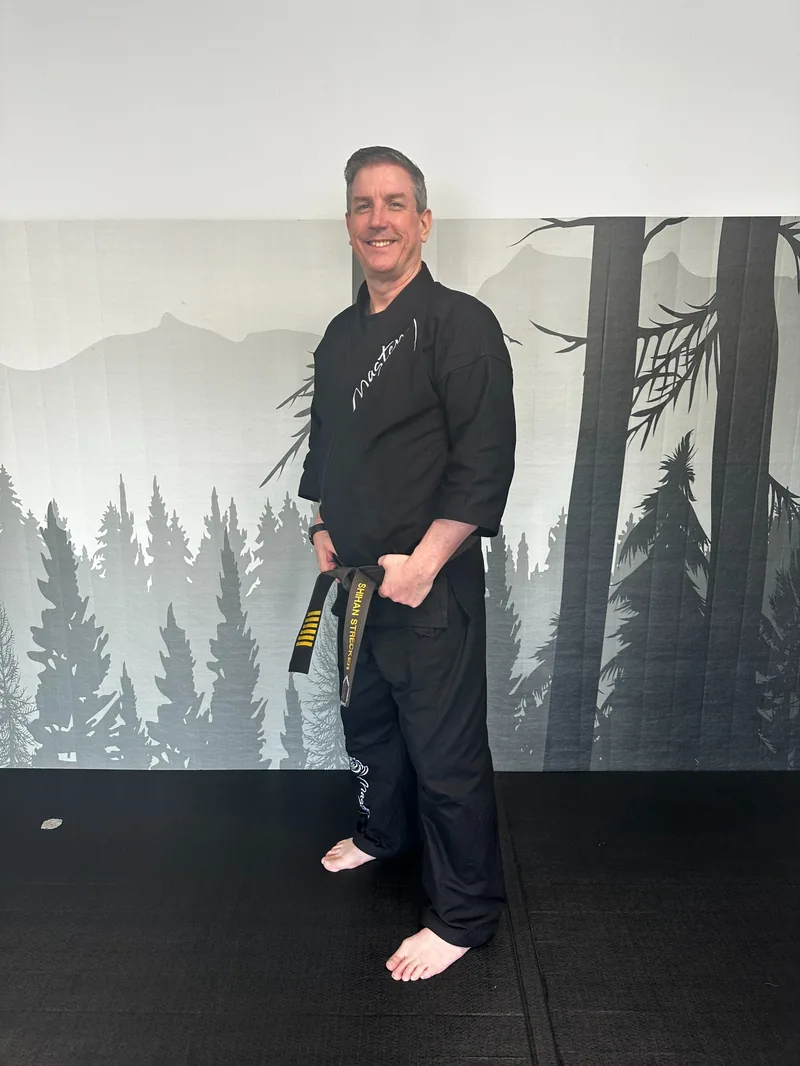
This is where Mastery Martial Arts sits. Programs in this tier are not just teaching martial arts. They are using martial arts as a structured vehicle for child development. The instructors are full-time professionals who are trained in how children learn, not just how to execute a perfect roundhouse kick. Class sizes are intentionally kept small so every child gets real individual attention. The curriculum is designed to build specific life skills, including focus, discipline, confidence, and respect, and those skills are reinforced in every single class.
At Mastery, our monthly tuition is $200 to $250 per month. That covers unlimited classes per week, all belt testing, and every event and program we run. There are no registration fees. No hidden testing fees. No equipment packages you’re required to buy. What you see is what you pay. We made that decision deliberately because we’ve seen how frustrating it is for families to get hit with unexpected charges, and we don’t think that’s how you build trust with parents.
The Hidden Fees That Can Double Your Actual Cost
Monthly tuition is only part of the story. One of the most important things to ask any school before you enroll is: what else will I be paying for? The martial arts industry, unfortunately, has a reputation for hidden fees, and some schools rely on them as a significant part of their revenue. Here is what to watch for.
Registration or enrollment fees are charged just to sign up. These can range from $50 to $150 and are often presented as a one-time administrative cost. Belt testing fees are charged every time your child tests for a new rank, which can happen every two to three months. At $25 to $100 per test, this adds up to several hundred dollars per year on top of tuition. Required equipment packages are sometimes mandatory at enrollment and can cost $100 to $300 for sparring gear, uniforms, and accessories. Long-term contracts are another red flag. Some schools require 12 to 24 month contracts with significant cancellation penalties, which puts you in a difficult position if your child decides to stop.
When you add these up, a school advertising $120 per month might actually cost you $150 to $200 per month once you factor in testing fees and other charges. Always ask for the total annual cost, not just the monthly rate. A transparent school will give you a clear answer without hesitation. If they’re evasive about it, that tells you something.
| Cost Factor | Community Center | Standard School | Mastery Martial Arts |
|---|---|---|---|
| Monthly Tuition | $50 to $100 | $120 to $180 | $200 to $250 |
| Registration Fee | Often $0 | $50 to $150 | $0 |
| Belt Testing Fees | Varies | $25 to $100 per test | Included |
| Class Size | Large (20+) | Medium (10 to 20) | Small, controlled |
| Character Development Focus | Minimal | Some | Core to every class |
| Instructor Training | Part-time / volunteer | Full-time martial artist | Full-time child development professional |
| Contracts | Usually none | Often 12 to 24 months | Month to month |
The Real Objection: Is It Worth the Cost?
I want to address the three things parents tell me most often when they’re hesitant about the investment. Because they’re all valid, and they all deserve a real answer.
“I’m Not Sure We Can Afford It”
I hear this one a lot. And I always ask the same follow-up question: what are you currently spending on your child’s activities? Soccer registration, equipment, and travel can easily run $800 to $1,500 per season. Dance classes, recital costumes, and competition fees can be similar. A professional martial arts program at $200 to $250 per month is $2,400 to $3,000 per year. When you compare it to other activities on a per-month basis, it’s often competitive. The difference is that martial arts is a year-round program with no off-season, no tryouts, and no bench time. Every child participates in every class.
More importantly, think about what you’re getting in return. If your child is struggling with focus at school, or getting notes home about behavior, or struggling with anxiety and shyness, the cost of not addressing those things is much higher than any tuition. We’ve seen children go from failing grades to honor roll. We’ve seen kids who couldn’t make eye contact with a stranger become confident, articulate young people. That’s not an activity. That’s a transformation. If you want to understand more about the specific benefits, our post on how karate helps kids with anxiety and low confidence is a good place to start.
“What If My Kid Won’t Stick With It?”
This is the most common concern, and it’s completely understandable. No parent wants to pay for something their child is going to quit in three weeks. Here’s what I’ve observed after working with hundreds of families: kids quit activities when they don’t feel successful, when they don’t feel connected, and when they don’t feel like they belong. A great martial arts program is specifically designed to prevent all three of those things.
Every child starts at white belt. There’s no tryout, no cut, no “you’re not good enough.” The curriculum is designed so that every child experiences small wins in every single class. That builds momentum. That builds buy-in. We’ve had children who were absolute reluctant beginners become some of our most passionate students within a few months, simply because they started feeling capable and confident in a way they hadn’t before. If you’re wondering what age is the right time to start, we’ve written a detailed guide on the best age to start karate that might help you think through the timing.
“Isn’t This Just an Activity?”
This is the one that I’m most passionate about addressing. I understand why parents see it that way from the outside. But the parents who enroll their children at Mastery are not looking for an activity. They’re looking for a solution. They’re looking for something that helps their child listen better, focus longer, handle frustration without melting down, and walk into a room with their head up. Those are life skills. And they’re exactly what a well-designed martial arts program teaches, in every class, consistently, over time.
We are a kids-only program. We don’t teach adults. We don’t teach MMA. Every single thing we do is designed around the developmental needs of children ages 3 to 12. That focus is what makes the difference. If you want to see what that looks like in practice, take a look at our Personal Power Plans and how we structure the journey for each child.

Age-Specific Programs and What They Cost
One thing that separates a professional program from a one-size-fits-all class is age-appropriate curriculum. A three-year-old and a ten-year-old are in completely different developmental stages, and the instruction they need looks very different. Here’s how our programs are structured at Mastery.
Our Tiny Tigers program is designed for children ages 3 and 4. At this age, the focus is entirely on fun, movement, listening games, and building the foundational habit of following instructions. Our Little Dragons program for ages 5 and 6 introduces more structure and begins building the focus and discipline habits that will serve them in kindergarten and first grade. Our Kids Karate program for ages 7 through 12 is where the real character development work happens, with progressively more complex curriculum, leadership opportunities, and goal-setting built into every rank advancement. All programs are included in the same monthly tuition with no age-based price differences.
How to Try It Before You Commit: Our Free Intro Lesson and 14-Day Trial
We know that reading about a program is very different from experiencing it. That’s why we’ve built a risk-free way for every family to try Mastery before making any financial commitment. Every new student starts with a free, one-on-one introductory lesson with one of our instructors. This is not a group class. It’s a private session designed to introduce your child to the environment, meet their instructor, and experience what a class actually feels like. There’s no pressure, no sales pitch, and no obligation.
After the intro lesson, families who want to continue can join our 14-day trial program. Two full weeks of classes, meeting other students, experiencing our curriculum, and seeing the results for yourself. At the end of those 14 days, you’ll have everything you need to make an informed decision. Most families don’t need the full two weeks. They usually know within the first few classes.
The Bottom Line on Kids Martial Arts Class Costs
Kids martial arts classes cost anywhere from $50 to $300 per month in 2026, depending on the type of program. Community center programs are the most affordable but offer the least in terms of individual attention and character development. Standard schools offer a solid middle ground. Professional, child-focused programs like Mastery Martial Arts represent the highest investment and the highest return, with transparent pricing, no hidden fees, and a curriculum built entirely around helping your child become the best version of themselves.
The question isn’t really “how much does it cost?” The question is “what is it worth?” And that answer is different for every family. But if you’re looking for something that will genuinely change your child’s trajectory, not just keep them busy on Tuesday nights, the investment is worth having an honest conversation about. We’re here to have that conversation whenever you’re ready.
Start with the free intro lesson. See it for yourself. You can book it directly on our home page or learn more about our programs here. There’s no cost, no obligation, and no pressure. Just a chance to see what’s possible for your child.