Parent Guide · Troy, MI
Emotional Regulation for Kids in Troy, MI
The complete parent’s guide to helping children handle big emotions. Meltdowns, tears over losing, homework rage — this guide explains why it happens, what actually builds emotional control, and what you can do about it starting today.
By Denny Strecker · Chief Instructor, Mastery Martial Arts · Author of “From Chaos to Calm” · Updated June 2026
Get My Child’s Free 30-Day Pass → Read the Guide
The Basics
What Is Emotional Regulation?
Emotional regulation is your child’s ability to notice what they’re feeling, understand it, and manage their response so it fits the situation. It’s the difference between a child who feels frustrated and asks for help — and a child who feels frustrated and flips the game board.
Here’s what most parents get wrong: emotional regulation is not the absence of big feelings. A well-regulated child still gets angry, disappointed, and frustrated. The skill is what happens next — can they ride the wave without being swept away by it?
And it is a skill, not a personality trait. Just like reading or riding a bike, emotional regulation is learned through instruction, modeling, and — most importantly — practice. No child is born with it, and no child is incapable of learning it. In 34 years of teaching children in Troy, I have never met a kid who couldn’t improve at this. Not one.
The Brain Science
Why Kids Struggle With Big Emotions
The emotional center of your child’s brain — the part that generates anger, fear, and frustration — is fully operational from toddlerhood. The braking system — the prefrontal cortex, which handles impulse control and “thinking before acting” — doesn’t finish developing until the mid-20s.
So when your 7-year-old melts down over a broken pencil, you’re not watching bad behavior. You’re watching a Ferrari engine paired with bicycle brakes. The feeling arrives at full speed, and the equipment needed to slow it down simply isn’t finished being built.
This is why “he should know better by now” is usually the wrong frame. Knowing better and doing better in the heat of the moment are two different skills — and the second one only develops through repeated, supported practice. A child who struggles with emotional regulation isn’t broken, and it doesn’t mean you’ve failed as a parent. It means there’s a skill gap — and skill gaps can be closed.
Know the Signs
7 Signs Your Child Is Struggling With Emotional Regulation
Every child melts down sometimes. But if several of these patterns happen regularly, your child is telling you they need help building this skill.
That last one surprises parents the most. It’s actually a good sign — it means your child can regulate. They just run out of capacity, and home is where they feel safe enough to fall apart. The goal is to grow the capacity.
- Meltdowns over small things — the reaction is far bigger than the trigger, and once it starts, there’s no reasoning with them.
- Crying or raging when they lose — board games, video games, sports. Losing feels unbearable, so they quit, cheat, or explode.
- Quitting the moment something gets hard — especially common in bright kids who are used to things coming easily.
- Explosive anger followed by genuine remorse — they feel terrible afterward, which tells you they lack control, not character.
- Homework battles — frustration with a math problem turns into tears, yelling, or a refusal to try at all.
- Trouble with transitions — ending screen time, leaving the playground, or switching activities triggers a fight every time.
- Holding it together at school, exploding at home — they spend all their regulation energy during the day and have nothing left for you.
The Common Mistake
Why “Calm Down” Never Works
When a child is emotionally flooded, the thinking part of their brain is temporarily offline. Language, logic, and consequences don’t land — which is why explaining, lecturing, or threatening in the middle of a meltdown almost always makes it worse. You’re speaking to a part of the brain that isn’t answering the phone.
Punishing the meltdown doesn’t teach regulation either. It teaches kids to hide their feelings, not handle them. The anger doesn’t disappear — it goes underground, and resurfaces as sneakiness, anxiety, or bigger explosions later.
What works is the opposite order of what instinct tells us: calm the body first, connect second, coach later. A child’s nervous system settles fastest next to a calm adult — this is called co-regulation, and it’s the bridge every child crosses on the way to regulating alone. The teaching moment comes after the storm, never during it.
The Path
How Kids Actually Learn Emotional Regulation
After three decades of working with thousands of children, I can tell you that every child who learns to manage their emotions follows the same four-step path.
Name the Feeling
Kids can’t manage what they can’t name. “Name it to tame it” is real: building an emotional vocabulary — frustrated, disappointed, embarrassed, nervous — gives the thinking brain a handle on the feeling.
2Calm the Body First
Emotions live in the body — racing heart, tight fists, shallow breath. Slow, deep breathing is the fastest tool a child can carry anywhere. But it only works in a crisis if it’s”actice Under Safe Pressure
The step almost everyone skips — and the most important one. You cannot learn emotional regulation in calm moments alone, just like you can’t learn to swim on dry land. Kids need repeated, small, safe doses of frustration with a coach right there to guide them.
4Repeat Until It’s Automatic
Regulation isn’t a lesson; it’s a rep. The child who practices staying composed under pressure two or three times a week, for months, builds a brain that defaults to composure. There is no shortcut — but the compounding is remarkable.
Practice Under Safe Pressure
How Martial Arts Builds Emotional Control
That third step is exactly what a well-run martial arts class is engineered to deliver. Here’s what’s actually happening on the mat.
Structure & Predictability
Bowing in, lining up, set routines. A predictable environment lowers baseline anxiety, which gives kids spare capacity to handle frustration when it shows up.
Breathing Is Built In
Every class includes controlled breathing — before techniques, between drills, after exertion. Kids get hundreds of calm-body reps without ever being told “go practice breathing.”
Safe Doses of Frustration
A kick they can’t land yet. A board that doesn’t break. A belt test they have to wait for. Martial arts serves frustration in small, survivable portions — the exact conditions regulation grows in.
Coaching in the Moment
When a child gets frustrated in class, an instructor is right there — catching the moment, naming it, and walking them through it. That real-time coaching is what parents can rarely do during homework battles.
Losing Is Normalized
In games and partner drills, everyone loses sometimes — and class continues. Kids learn by repetition that losing is uncomfortable, not unbearable.
Visible Proof They Can Do Hard Things
Every stripe and belt is earned through struggle. Kids build a body of evidence: “I’ve been frustrated before, I worked through it, and I got better.” That evidence is what confidence is made of.
At Mastery Martial Arts in Troy, this isn’t a side effect — it’s the curriculum. Our Personal Power Plans give each student a specific plan for what they need most, and for many kids, emotional control is exactly that.
Age by Age
Emotional Regulation by Age: What to Expect
Expectations matter. Here’s what’s developmentally normal at each stage — and how we work on it at every age at our school.
The Foundation Years
Full meltdowns are normal — the brakes barely exist yet. The win at this age is following simple directions, waiting briefly for a turn, and connecting words to feelings. Our Tiny Tigers program builds these foundations through fun, play-based structure.
The Skill-Building Window
The golden window. Kids can start using breathing on purpose, naming feelings, and recovering from disappointment with help. Emotional regulation is a core outcome of our Little Dragons program for exactly this reason.
Pressure Shows Up
School, grades, sports, and friendships raise the stakes. Kids this age can learn real self-talk and recovery strategies — but they need practice under pressure, not just conversations. That’s the heart of our Kids Karate program.
The Pre-Teen Storm
Hormones arrive before the brakes finish. Even previously calm kids wobble here. Our Kids Karate program builds the inner strength and leadership skills that carry kids through the pre-teen years.
Regulation Becomes Resilience
Teens face real pressure — academics, social media, identity. Emotional regulation matures into resilience and composure under stress. That’s the focus of our Teen Martial Arts program.
From the Chief Instructor
What 34 Years on the Mat Has Taught Me
I’ve been teaching children in Troy since 1992. The kids have changed — the phones, the pace, the pressure — but the conversations I have with parents have stayed remarkably the same.
“Most parents I talk to tell me the same thing. They love their kids more than anything, but some days — especially after school, during homework, at the dinner table — they feel like they are losing the battle. The constant arguing, the meltdowns, the phone addiction, the ‘I don’t want to.’ It wears them down.”The kids who struggle most with big emotions are almost never “bad kids.” They are usually bright, sensitive, often wonderful kids who are missing one specific skill — and nobody has ever actually trained it. We talk to kids about their feelings constantly. We almost never give them structured practice at managing those feelings under pressure.
“What I do is give parents their peace back. I work with kids to build the kind of internal discipline and self-respect that makes them easier to raise. Parents tell me that within a few months, the morning routine changes, the homework fights stop, and they actually start enjoying their kid again. I just happen to do it through martial arts.”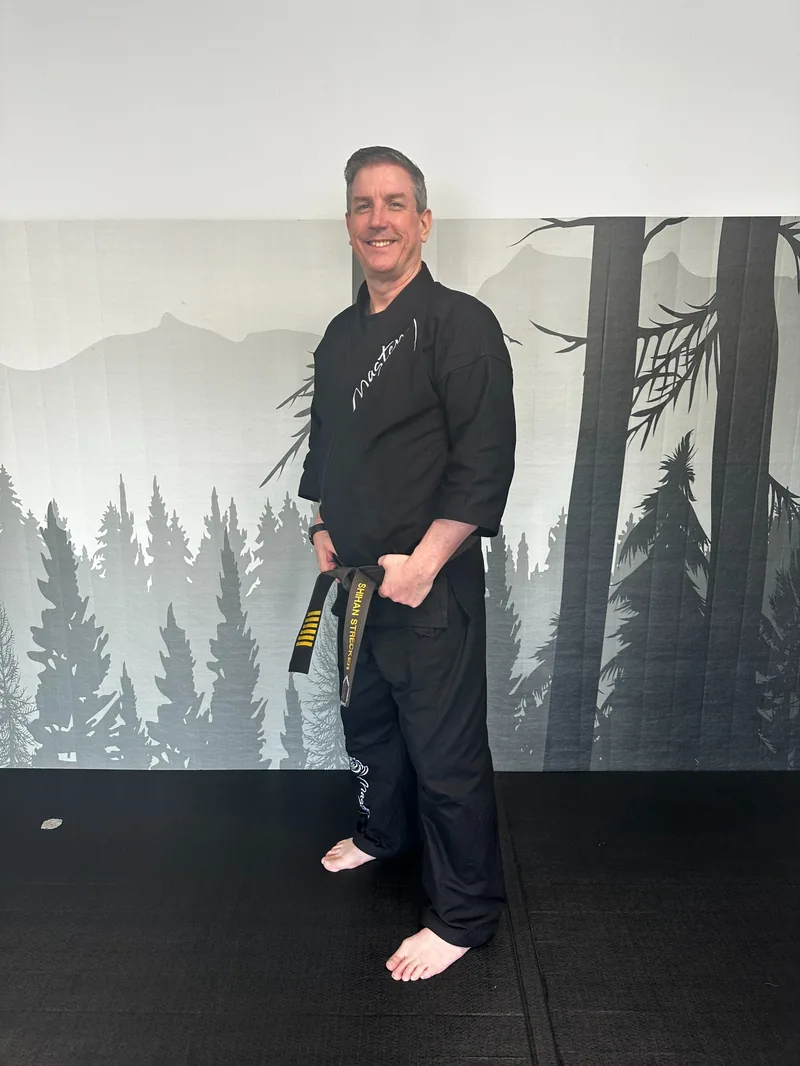
Questions Parents Ask
Parent FAQ
At what age should my child be able to control their emotions?
Later than most parents expect. Toddlers and preschoolers rely almost entirely on adults to calm down. Ages 5–7 is when kids can start using tools like breathing on purpose — with coaching. Consistent self-regulation under pressure is a work in progress through the teen years, because the brain’s braking system doesn’t finish developing until the mid-20s. The question isn’t “is my child there yet?” — it’s “is my child practicing?”
Is my child’s behavior normal, or should I be concerned?
Occasional meltdowns are normal at every age. Talk to your pediatrician if the intensity seems extreme for their age, meltdowns regularly last a very long time, your child is hurting themselves or others, or the struggles are seriously disrupting school and friendships. Conditions like ADHD, anxiety, and sensory processing differences can make regulation genuinely harder, and a professional evaluation gives you real answers. Martial arts works alongside professional support beautifully — but it’s a complement, not a replacement.
Won’t martial arts make my child more aggressive?
This is the most common worry I hear, and the answer after 34 years is a clear no — when the school teaches character first. Kids in a structured martial arts program learn that power comes with restraint. Every technique is practiced inside a framework of respect, self-control, and discipline. The fidgety, explosive kids usually become the calmest ones in the room.
How long does it take to see changes?
Parents typically notice the first real differences within a few months — calmer mornings, fewer homework battles, faster recovery after disappointments. Deep, durable regulation builds over years of practice, the same way reading skills do. This is a compounding investment, not a quick fix.
What can we do at home starting tonight?
Three things. First, stay calm during their storms — your regulation is the model their brain borrows. Second, practice slow breathing together at calm times, so the tool exists before the crisis. Third, stop rescuing your child from every small frustration — safe struggle is where the skill grows. For more tools, visit our Parent Resources hub.
What age can my child start at Mastery Martial Arts?
We start at age 3 with Tiny Tigers, and have age-specific programs through the teen years. Every new family starts with a free trial so you can see the approach in action before deciding anything.
Go Deeper
The Emotional Regulation Library
This guide is the starting point. Each article below goes deeper on one specific challenge.
Tantrum vs Meltdown
How to tell the two apart, what is happening in your child’s brain, and what to do in the moment.
Read the article →Why Some Kids Cry When They Lose
Sore-loser behavior explained — and how kids learn to lose without falling apart.
Read the article →Frustration Tolerance in Children
The skill underneath homework battles, quitting, and giving up — and how to grow it.
Read the article →Anger Management Skills for Kids
Practical, age-appropriate tools kids can actually use when anger hits.
Read the article →About the Author
Denny Strecker, Chief Instructor
Denny Strecker has taught children emotional control, confidence, and discipline at Mastery Martial Arts in Troy, Michigan since 1992 — working with thousands of Troy-area families and earning a 4.9 Google rating with over 270 Google reviews. He is the author of two parenting books, “How to Double Your Child’s Confidence in Just 30 Days” and “From Chaos to Calm: How to Instill Self-Control and Discipline in Your Child,” and hosts the YouTube show “How to Raise Black Belt Kids.”
Mastery Martial Arts · 3656 Rochester Road, Troy, MI 48083 · (248) 247-7353
Learn more about our school →Free 30-Day Pass · Troy, MI
Ready to Build Your Child’s Emotional Control?
Reading about emotional regulation helps. Practicing it is what changes kids. At Mastery Martial Arts in Troy, your child gets structured practice, real-time coaching, and a proven path — and you get your peace back.
Get My Child’s Free 30-Day Pass →Or explore more guides on our Parent Resources hub · (248) 247-7353