

When parents call our school in Troy, they rarely ask about kicks and punches. They ask about meltdowns and emotional control. Homework battles. A child who explodes when he loses at Mario Kart, or shuts down the second something gets hard. And then they ask the real question: “Can martial arts actually help with that?”
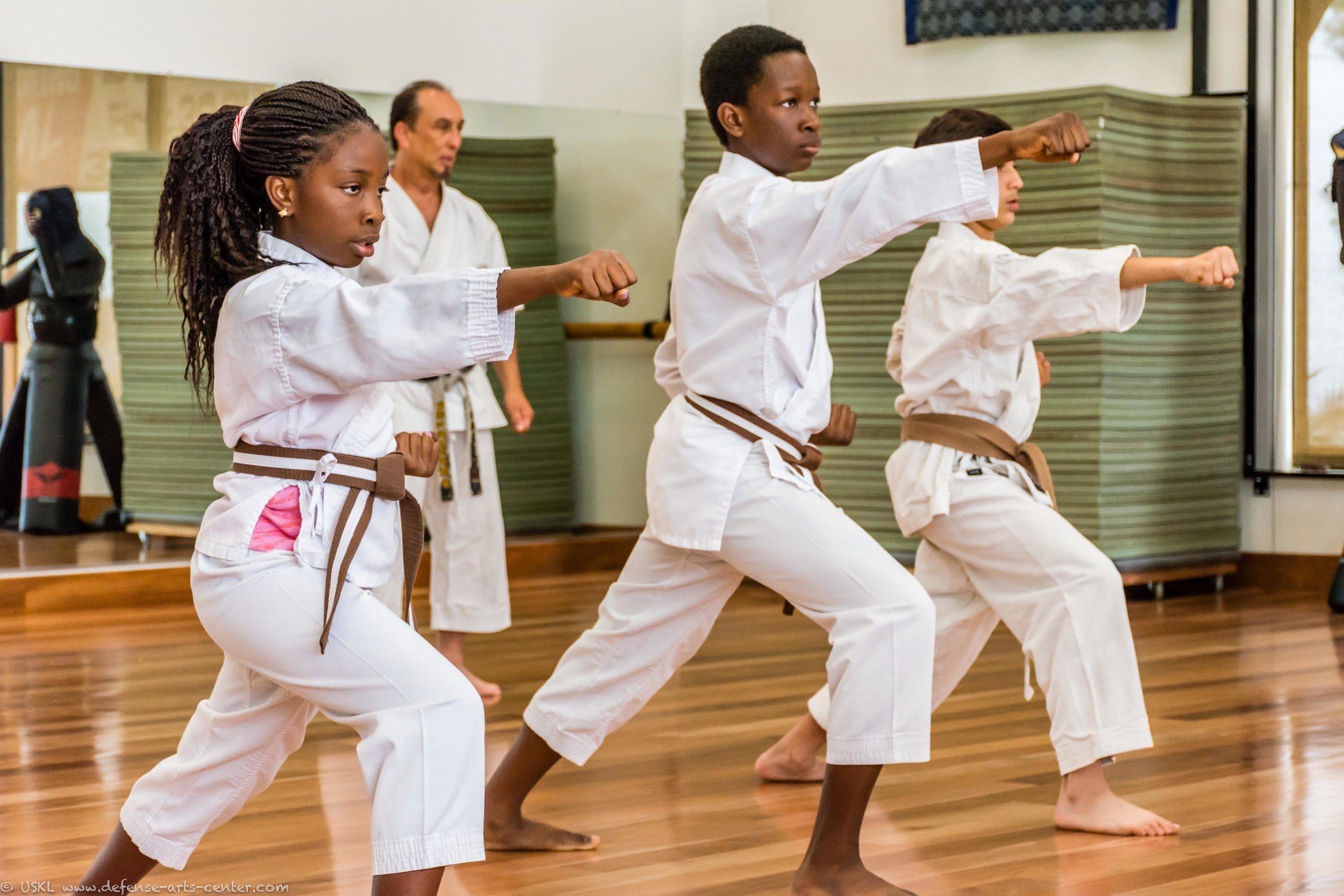
After 33 years of teaching kids emotional control on the mat, my answer is yes — but not for the reason most people think. There’s nothing magical about punching a pad. The magic is in the structure of the class itself, which happens to be one of the best emotional control training systems ever designed for children. Here’s what’s actually happening on the mat.
1. Structure Lowers the Baseline
Every class follows a predictable rhythm — bow in, line up, warm up, drill, bow out. That predictability matters more than it looks. An anxious, dysregulated brain spends its energy bracing for surprises. A predictable environment frees up that capacity, so when frustration shows up, the child has reserves to handle it.
2. Breathing Practice Is Hidden Inside Everything
Ask a child to “practice deep breathing” and you’ll get an eye roll. But in martial arts, controlled breathing is simply part of how things are done — before techniques, between drills, after exertion. Kids get hundreds of repetitions of calming their own body without ever realizing they’re practicing the single most useful emotional control tool there is. Then one day, a parent watches their child stop mid-meltdown and take a slow breath, and calls us amazed.
3. Frustration Arrives in Safe, Small Doses
You cannot learn emotional control in calm moments, any more than you can learn to swim on dry land. The skill only grows under real frustration — but the dose has to be survivable. Martial arts is engineered for exactly this: a kick that won’t land yet, a board that doesn’t break on the first try, a stripe that has to be earned over weeks. Every class serves up small portions of difficulty, and every week the child survives them and comes back stronger.
4. A Coach Catches the Moment
Here’s what parents can almost never do during a homework battle: coach the emotion in real time while staying completely calm. We can — because we’re not the child’s parent, and because we see these moments every single day. When a student’s fists clench and the tears start, an instructor is right there: “I can see you’re frustrated. Take a breath. Now try again.” That moment — feeling the feeling and acting well anyway, with support — is the actual rep that builds the skill. Multiply it by two classes a week for a year.
5. Losing Becomes Normal
In partner drills and class games, everyone loses regularly — and class simply continues. No one rushes in to soothe, and no one shames. Losing gets reclassified from “unbearable catastrophe” to “uncomfortable, normal, survivable.” For sore losers, this alone is transformative.
6. The Belt System Builds Proof of Emotional Control
Every stripe and every belt is earned through visible struggle. Over time, a child accumulates something priceless: a body of evidence that says I have been frustrated before, I kept going, and I got better. That evidence is what real confidence is made of — not compliments, but receipts.
What Parents Tell Us
The pattern parents report is remarkably consistent: within a few months, mornings get calmer, homework fights shrink, and recovery after disappointment gets faster — all the signs of growing emotional control. As I often tell parents — what I really do is give them their peace back. I just happen to do it through martial arts.
This article covers the “how” of emotional control. For the complete picture — the brain science, the signs of struggle, and what to expect at every age — read our full guide: Emotional Regulation for Kids in Troy, MI. You’ll find more parenting guides on our Parent Resources hub, and age-specific program details starting with Little Dragons (ages 5–6), where emotional regulation is a core outcome.
See It Happen on the Mat
The fastest way to understand it is to watch your own child do it. Schedule a free trial lesson at Mastery Martial Arts in Troy.
▶ Schedule a Free Trial Lesson