
Mastery Martial Arts · Troy, MI
How Peer Pressure Can Actually Be a Good Thing (When the Peers Are Right)
When it comes to how peer pressure can be good for kids, parents in Troy, Michigan are finding that martial arts is one of the most effective tools available. You’ve probably spent years warning your child about peer pressure. “Don’t let your friends influence you into doing something you’ll regret.“ “Don’t follow the crowd.“ It’s solid parenting advice—and it’s incomplete.

Here’s what most parents don’t talk about: peer pressure isn’t inherently bad. It’s one of the most powerful forces for positive change in a child’s life. The trick isn’t to eliminate peer influence. It’s to choose which peers get to have that influence.
Why Your Child’s Peer Group Matters More Than You Might Think
This is the core insight behind how peer pressure can be good for kids — social influence doesn’t have to pull children down; it can lift them up.
Kids are neurologically wired to watch their peers. They’re tracking what’s normal, what gets respect, what’s worth working toward. If your child spends their time with kids who play video games all night, they’ll think that’s normal. If they’re surrounded by kids who push themselves, who practice hard things, who show up even when it’s difficult—they’ll internalize that as the standard.
The peer environment your child is in doesn’t just influence small decisions. It shapes their self-perception, their work ethic, their resilience. The research is clear: kids rise to the level of the room they’re in.
And here’s the thing—you can’t simply insulate your child from outside influences. Peer influence is powerful precisely because it’s not forced. Your kids want to be part of the group. That drive is healthy and normal. So instead of fighting against it, we can redirect it.
Ready to see what the right peer environment can do for your child? Try a 30 free days at Mastery Martial Arts in Troy, MI. No pressure—just a chance to experience what’s possible when a child is surrounded by the right influences.
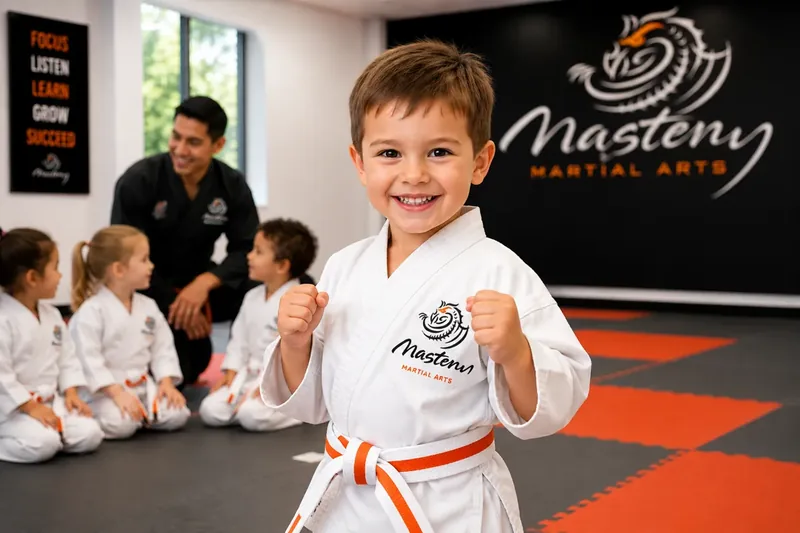
Our Dojo Is a Carefully Curated Peer Environment
Understanding how peer pressure can be good for kids begins with choosing the right peer group, not eliminating peer influence altogether.
This isn’t an accident. Every person who walks into our Troy, Michigan dojo—from instructors to the kids who’ve been training for years—is here because they share the same values. They value discipline, respect, effort. They don’t mock kids who fail at a technique. They celebrate growth. They show up even when it’s hard. According to the American Psychological Association, consistent structured practice is one of the most effective tools for developing lasting character in children.
That culture doesn’t happen by chance. It’s built intentionally. And when your child steps into that environment, they feel it immediately. It’s different from school. It’s different from their neighborhood. Suddenly, working hard isn’t unusual. Being respectful isn’t weak. Pushing yourself to be better isn’t showing off—it’s just what everyone does.
Older Students Model What’s Possible
The research on how peer pressure can be good for kids shows that children surrounded by motivated peers develop higher standards for themselves.
One of the most underrated aspects of a multi-age dojo environment is that kids see possibility. A seven-year-old doesn’t see a ten-year-old as intimidating—they see a version of themselves in a few years. They watch that older kid execute a technique with precision, earn a new belt, handle a challenge with composure, and something shifts internally. They think: “I want to be able to do that.“
That’s not peer pressure in the negative sense. That’s inspiration. That’s a kid naturally reaching toward the next level because they can see what’s possible.
Peer Encouragement Replaces Peer Pressure
Here is another angle on how peer pressure can be good for kids: it teaches them to navigate social expectations — a critical life skill.
In Troy and the surrounding communities—Sterling Heights, Rochester Hills, and beyond—parents often ask us about social dynamics in class. “Will my child feel excluded if they’re not the best?“ The answer is no, because we’ve built a culture where encouragement is the default.
When a classmate struggles with a new form, the other kids don’t laugh. They watch. When that kid nails it the next time, everyone celebrates. That’s peer pressure you actually want—the quiet pressure to show up, to keep trying, to be part of a community that lifts each other up.
Kids Rise to the Level of the Room They’re In
When you understand how peer pressure can be good for kids, you stop trying to protect them from all social influence and start curating the right kind.
Parents in Troy, MI tell us the same thing over and over: “My child is different since starting classes.“ What they’re noticing isn’t that their kid became more athletic or learned to throw a better punch. It’s that their child’s baseline shifted. They carry themselves differently. They push harder at school. They talk about challenges differently. They’ve absorbed the values of the room they spend time in.
That’s the ripple effect of being in an environment where growth is normal, where respect is non-negotiable, where effort is celebrated. Your child doesn’t catch it—they absorb it through osmosis.
The Ripple Effect: What Parents Notice
After a few weeks in our Troy dojo, something shifts. Parents describe watching their child push harder in other areas of life. Not because we’re yelling at them, but because they’ve internalized a new standard for what they’re capable of. We hear it from parents in Troy, Rochester Hills, and Sterling Heights alike: “My child wants to practice at home. My child is talking about their goals differently. My child seems prouder.“
That’s not a coincidence. That’s a child who’s been given a new mirror. They’re looking at the kids around them and subconsciously asking: “What are they doing? What are they willing to work for? Who do I want to be?“
If you’re looking for an environment where peer influence becomes a tool for growth, we’d love to have you visit. Your child doesn’t need to be the most athletic kid in the room. They just need to walk through the door of our Troy, Michigan dojo and start absorbing what’s possible.
Your Child Doesn’t Need to Be Perfect—They Just Need the Right Peers
Peer pressure isn’t something to fear. It’s something to leverage. When you place your child in an environment where the peers around them value growth, respect, and effort, you’ve given them one of the most powerful tools for becoming who they want to be.
Understanding how peer pressure can be good for kids requires looking beyond the negative examples that dominate parenting conversations and into the real science of social learning.
How peer pressure can be good for kids is a question most parents never ask — but once they see the right peer environment in action, the answer is obvious.
At Mastery Martial Arts in Troy, Michigan, how peer pressure can be good for kids plays out every class: students push each other to show up, try harder, and model the character traits they want to earn.
At Mastery Martial Arts in Troy, Michigan, how peer pressure can be good for kids is something we work on every single class — because we believe every child deserves to feel capable, confident, and ready for whatever comes next. Parents from Birmingham, Sterling Heights, and Rochester Hills bring their kids to us specifically because of our focus on how peer pressure can be good for kids.
Explore our programs for every age: Little Dragons (Ages 5–6), Kids Karate (Ages 7–9), or Kids Karate (Ages 10–12). For more parenting tools, visit our Parent Resources Hub.
Every parent who grasps how peer pressure can be good for kids has one major advantage: they look for communities that lift their child up rather than just shield them from all influence.
At Mastery Martial Arts in Troy, MI, we see daily proof of how peer pressure can be good for kids — students push each other to be better every single class.
Free Class · Troy, MI
See it for yourself.
Bring your child in for a free introductory lesson and 30 free days. No obligation to continue.
Get My Child’s Free 30-Day Pass →3656 Rochester Road, Troy · (248) 247-7353
For Parents
See our answers first on Google
Google now lets you choose the websites you trust most. The ones you choose move to the top of your search results. Add us, and our articles on focus, confidence, and bullying show up first, right when you’re looking for help. It takes ten seconds, and you can undo it anytime.
Make Us a Preferred SourceOpens Google. Tap the search box, then check the box next to “Mastery Martial Arts - Troy.”