
Mastery Martial Arts · Troy, MI
Karate vs Jiu-Jitsu for Kids
Karate vs jiu jitsu for kids: an honest parent comparison of striking vs grappling. What BJJ does well, what karate does well, contact levels, best starting ages, and how to choose the right martial arts school for your child in Troy MI.
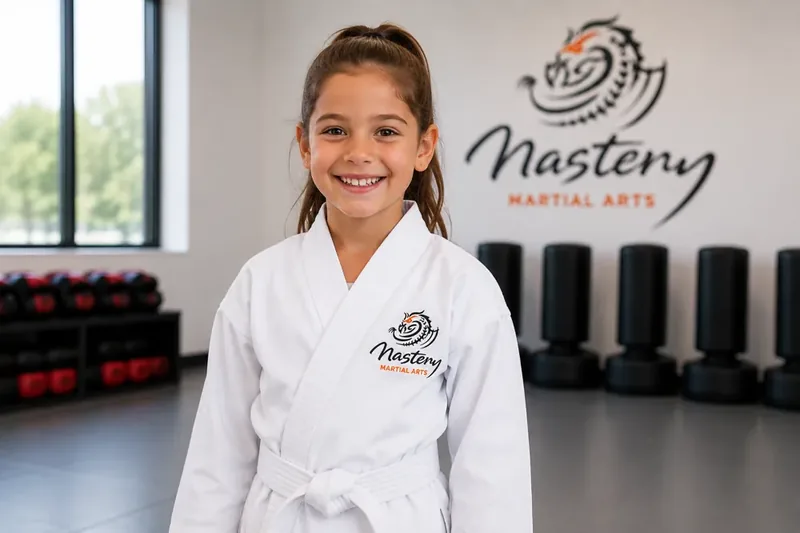
Troy parent: Trying to decide between karate and Brazilian Jiu-Jitsu for your child? Here is a fair comparison from a striking-arts instructor who has guided Troy families through this exact choice for 34 years — plus a free class at our kids karate classes in Troy, MI so you can see the karate side in person.
Karate vs jiu jitsu for kids is one of the questions I hear most — Brazilian Jiu-Jitsu has exploded in popularity, and parents ask me about it weekly. Full disclosure before we start: I am a striking-arts instructor — my black belts are in Tang Soo Do, Shorinji-Ryu, and Tae Kwon Do, not BJJ — so I will not pretend to teach you jiu-jitsu. What I can offer is 34 years of watching Troy families choose between these two paths, including kids who came to us from grappling gyms and kids who left us for them and thrived. Both outcomes are real, and this guide respects that.
This article is part of our larger guide on karate vs other sports for kids. Here we put the two arts side by side so you can match the art to your actual child — not to a trend.
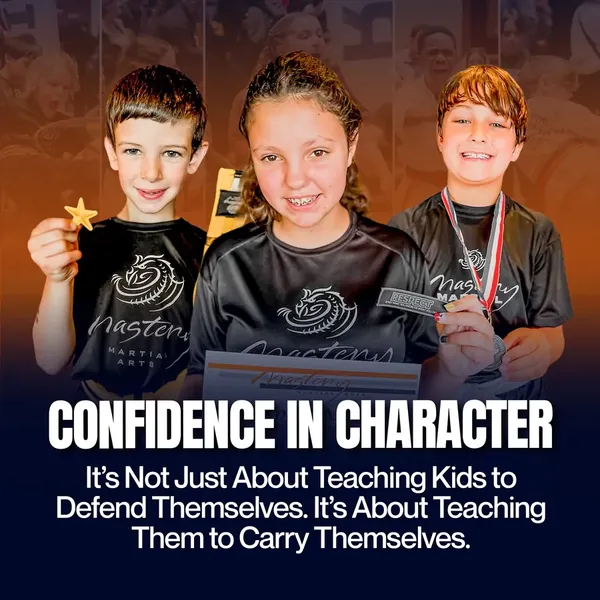
Striking arts and grappling arts build confidence through different doors.
What Jiu-Jitsu Does Well
Let us give BJJ full credit, because it has earned it. Jiu-jitsu is a grappling art: it teaches a child to control an opponent on the ground using leverage and technique instead of size and strength — a genuinely valuable skill, especially since many real schoolyard scuffles end up in a tangle. BJJ classes also “pressure-test” constantly: kids roll (spar on the ground) in nearly every class, so they learn quickly what works. For a child who loves to wrestle everything that moves, who craves rough-and-tumble contact, jiu-jitsu can feel like coming home.
What Karate Does Well
Karate and Tae Kwon Do are striking arts built around structure. Classes run on lines, commands, forms, and belt goals — a rhythm that is remarkably good at growing focus and self-control in young children, including the wiggly ones. Kids learn to manage distance, block, kick, and strike with control, while standing tall and making eye contact. And because striking classes involve less continuous body-to-body contact than grappling, they are often the more comfortable entry point for shy, sensory-sensitive, or space-conscious kids. One of our students, Kyleigh, fought through injuries and illness on her road to black belt — her Black Belt Story is what that structure builds over years: resilience.
Karate vs Jiu Jitsu for Kids: The Key Differences
Standing up vs. on the ground
The simplest difference: karate is fought on your feet at a distance; jiu-jitsu is fought up close and usually on the ground. Neither is “more real” — they cover different moments of a confrontation. Striking arts emphasize awareness, distance, and never letting it get to the ground; BJJ specializes in what to do if it does.
Contact level and comfort
This is the difference parents underestimate. BJJ involves constant close contact — another child gripping, pinning, and squeezing yours from day one. Some kids love it instantly. Others, especially anxious or sensory-sensitive children, find it overwhelming before the confidence benefits can arrive. Striking classes let a child build comfort gradually, with contact introduced in controlled doses.
Structure and the very young
Most BJJ programs do their best work with kids about 6–8 and up, when children can handle the problem-solving and the physicality of rolling. Structured striking programs scale younger — our Tiny Tigers start at age 3 — because lines, commands, and short focused drills fit preschool development. If your child is 3–6, a structured karate program is usually the stronger starting point; a child can always add grappling later.
What a class feels like
A good kids’ karate class feels like a high-energy classroom: bowing, counting, drills, forms, and character lessons woven in on purpose. A good kids’ BJJ class feels more like supervised competitive play: technique, then live rolling. Ask yourself which environment your specific child will walk into willingly twice a week for years — consistency beats style every time.
What I Tell Troy Parents
If your child is a natural wrestler who craves contact and is 8 or older, try a BJJ class — we are lucky to have quality grappling schools in the area, and we compare ourselves to one honestly in our Mastery vs APEX Jiu-Jitsu guide. If your child is 3–7, is shy, struggles with focus, or needs confidence and structure more than submission technique, a character-first striking program will usually serve them better right now. And whichever direction you lean, judge the individual school: watch a class, meet the instructor, and ask how they teach character — not just technique. The American Academy of Pediatrics’ HealthyChildren.org gives the same guidance on choosing youth martial arts programs. And if self-defense is your main goal, see our kids self-defense classes in Troy, MI.
The Bottom Line
Karate vs jiu jitsu for kids is not striking “versus” grappling — it is a question of which door your child will actually walk through, at their age, with their personality, week after week. BJJ offers pressure-tested ground skills and suits contact-loving kids. Karate offers structure, confidence, and a character curriculum that scales down to age 3. Choose the school that grows your child on purpose. If you want to see what that looks like on the striking side, your child’s first lesson with us is free.
Common Questions from Parents
Is jiu-jitsu or karate better for kids?
It depends on the child. Jiu-jitsu (BJJ) excels for contact-loving kids roughly 8 and up who enjoy wrestling and live sparring. Karate and Tae Kwon Do offer more structure, scale down to age 3, involve less constant body contact, and typically weave character development directly into the curriculum. The quality of the individual school matters more than the style.
Is BJJ safe for kids?
Reputable kids BJJ programs are generally safe, with injury rates comparable to other youth sports; good schools ban dangerous submissions for children and supervise rolling closely. The bigger question is comfort: BJJ involves constant close contact from day one, which suits some children and overwhelms others.
What age should a child start karate vs jiu-jitsu?
Structured striking programs like karate and Tae Kwon Do can start as young as age 3 with age-specific classes. Most BJJ programs are at their best for kids about 6-8 and older. Many families start young children in a striking art for structure and confidence, then add grappling later if the child wants it.
Which is better for self-defense for kids, karate or BJJ?
They cover different situations. BJJ specializes in one-on-one control if a confrontation goes to the ground. Karate emphasizes awareness, distance, blocking, and confident boundary-setting so most situations never become physical. For school-age bullying, the confidence and verbal skills a good program teaches usually matter more than any technique.
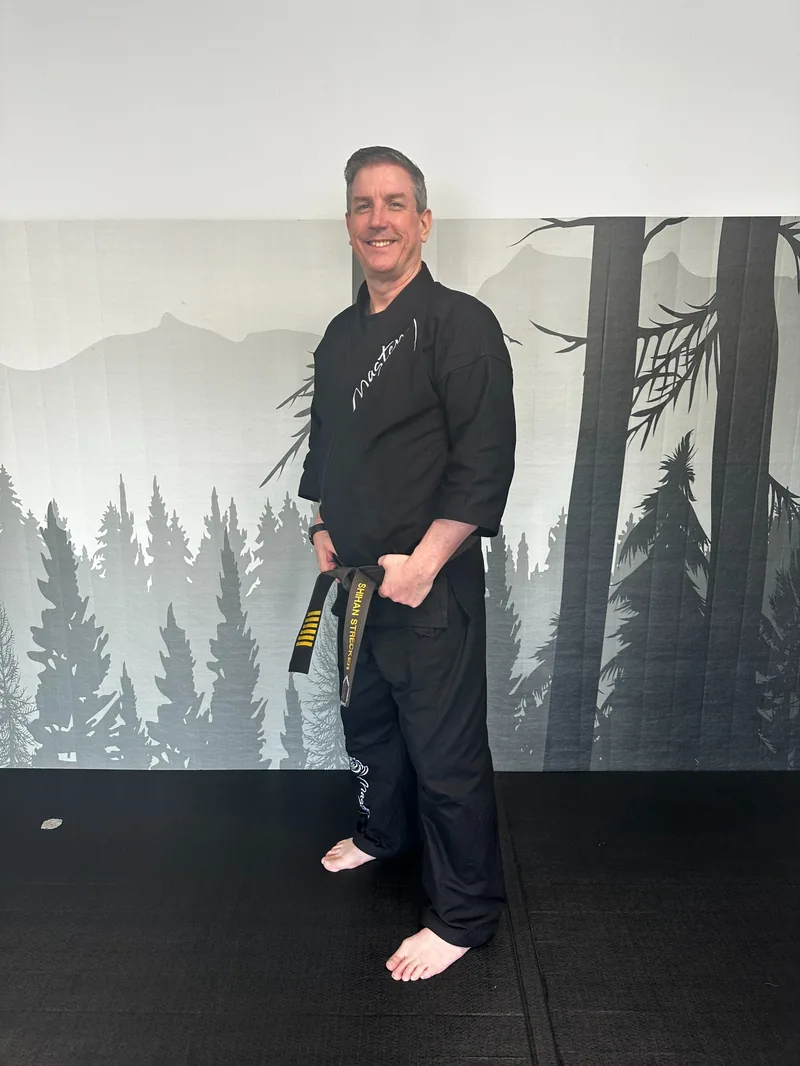
Denny Strecker, Chief Instructor — Mastery Martial Arts, Troy MI
Denny holds four black belts — currently a 6th degree — with ranks in Tang Soo Do (Korean karate), Shorinji-Ryu karate, and Tae Kwon Do, and has taught children in Troy since 1992. Mastery has trained 2,500+ kids across Mastery schools. He is the author of two Amazon best-selling parenting books: How to Double Your Child’s Confidence in Just 30 Days and From Chaos to Calm. Every Mastery student trains on a Personal Power Plan built around their individual growth.
Keep Comparing
Part of our complete parent guide to choosing the right activity for your child.
Karate vs Other Sports
The complete parent comparison guide that ties these together.
Karate vs Taekwondo
From an instructor ranked in both arts.
Mastery vs APEX Jiu-Jitsu
An honest look at two great Troy schools.
Bully Prevention Classes
How we teach kids to stand up without fighting.
See Which Path Fits Your Child
Book a free 1-on-1 Introductory Lesson at Mastery Martial Arts in Troy, MI, and watch how your child responds on the mat. No pressure, no commitment.
Book a Free Intro ClassFree Class · Troy, MI
See it for yourself.
Bring your child in for a free introductory lesson and 30 free days. No obligation to continue.
Get My Child’s Free 30-Day Pass →3656 Rochester Road, Troy · (248) 247-7353
For Parents
See our answers first on Google
Google now lets you choose the websites you trust most. The ones you choose move to the top of your search results. Add us, and our articles on focus, confidence, and bullying show up first, right when you’re looking for help. It takes ten seconds, and you can undo it anytime.
Make Us a Preferred SourceOpens Google. Tap the search box, then check the box next to “Mastery Martial Arts - Troy.”