

Mastery Martial Arts · Troy, MI
Kids Who Benefit From Martial Arts Most: 5 “Not the Karate Type” Myths
Too shy, too small, too uncoordinated, too sensitive, too distracted. After 34 years, I can tell you the kids parents rule out are the kids who benefit from martial arts the most.
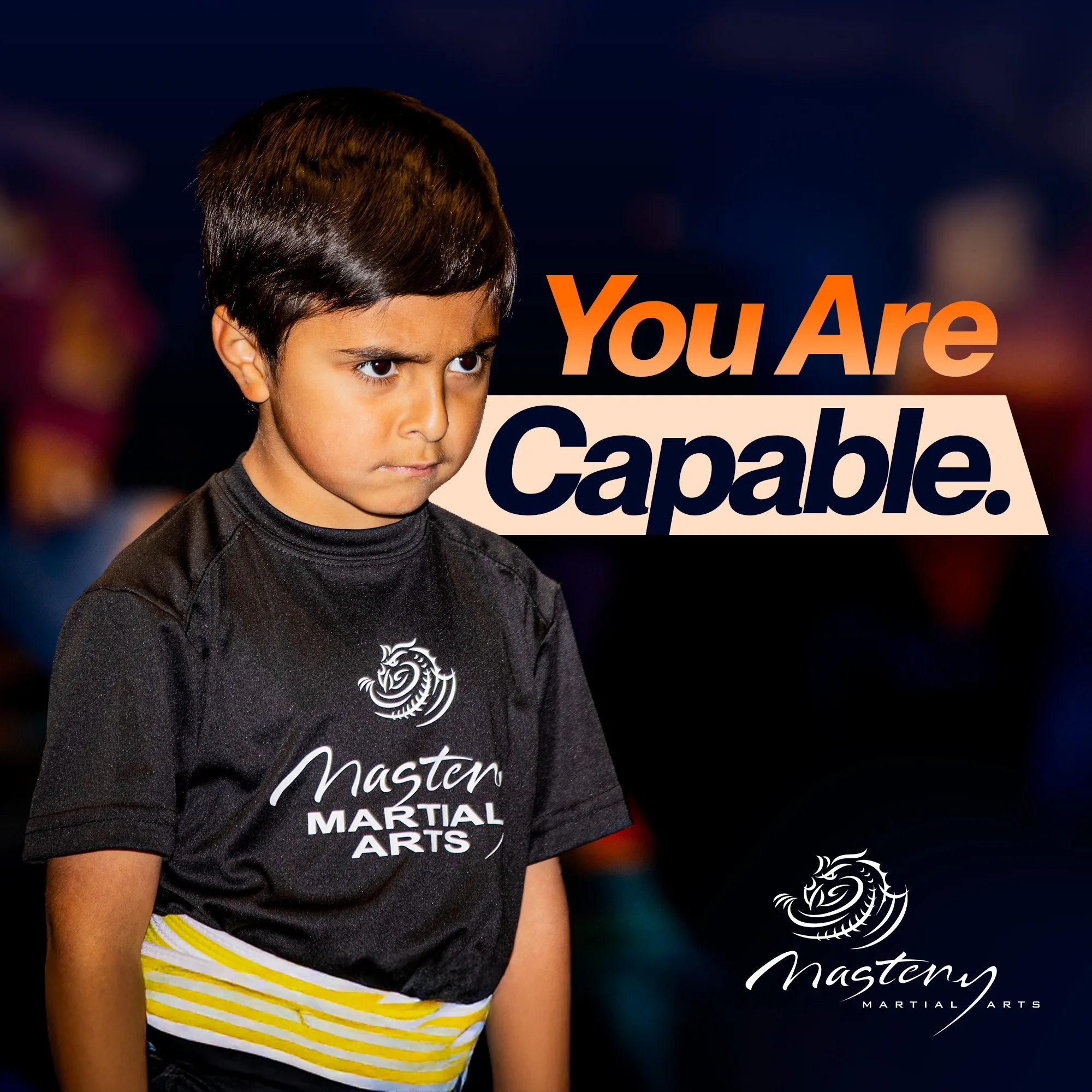
Most parents carry a picture from the movies: the “karate kid” is athletic, aggressive, coordinated, fearless. So parents of quiet, clumsy, gentle, or wiggly children look at martial arts and think “not for us.” They have it backwards. That picture keeps the kids who benefit from martial arts most out of the one room built for them.
Myth #1: “My Child Is Too Shy”
Shy kids do better on the mat than parents expect. Martial arts is individual progress inside a group, so your child is never picked last, never benched, and never competing for a spot. They practice being seen in small structured doses: answering the instructor, demonstrating for the class. None of it depends on being outgoing. The quiet kid who will not order their own food in September is often leading warmups by spring. You can read more in martial arts for shy kids and building confidence in a shy child.
Myth #2: “My Child Is Too Small”
Size matters less in karate than in any other physical activity your child could pick. That was the point of it from the start. Technique, balance, and leverage are the curriculum, and your child earns belts through skill and effort. Small kids often develop faster, because they cannot lean on strength and have to build clean technique instead. In football or basketball, being smallest costs your child playing time. Here it costs them nothing. Drills are matched by size and level.
Myth #3: “My Child Is Too Uncoordinated”
Saying a child is too uncoordinated for karate is like saying they are too illiterate for reading class. Coordination is what the class builds: balance drills, left-right patterning, crossing the midline, controlling big movements before small ones. Occupational therapists refer children to us for this reason. The clumsy 6-year-old does not stay clumsy. Give it six months and watch them on a playground.
Parents treat focus, coordination, confidence, and discipline as the price of admission. Your child builds all four inside the class. That is what the class is for.
Myth #4: “My Child Is Too Sensitive”
They might cry, early on, and in a good school that is fine. When your child tears up at a hard moment, the instructor meets it with patience, a reset, and another try. That is how a child builds resilience. Sensitive kids are unpracticed at recovering from frustration, and a class gives them hundreds of small safe chances to practice. (We cover the mechanics in how martial arts teaches emotional control and why some kids cry when they lose). One caution: this works only in a school whose culture handles tears with respect, which is what you are checking for in our red flags guide.
Myth #5: “My Child Can’t Focus for an Hour”
They will not be asked to. Kids’ classes run in 3 to 5 minute segments that rotate: drill, game, pads, challenge, repeat. Movement carries the focus training, which is why wiggly kids, including kids with ADHD, often focus better in karate than anywhere else in their week. We start where your child’s attention span already is, then stretch it. Parents tell us their child’s teacher noticed the difference within a few months. Our post on how karate improves school performance.
Readiness Comes Down to Four Things
Study after study indexed by the National Library of Medicine backs this up: the kids who benefit from martial arts most are the ones who arrive without the natural-athlete toolkit. Readiness comes down to four things:
- Age-appropriate placement. A 4-year-old belongs in a preschool program (see our complete preschool guide)
- The ability to be away from you for one class. For the youngest students, that is the whole entry bar.
- A school that knows how to teach children. Vet it with our safety guide
- A parent who frames it as growth. Kids rise to “this will make you stronger” and shrink from “this will fix you”
The full age-by-age breakdown lives in our readiness guide, with more at the Parent Resources hub.
The Kids Who Benefit From Martial Arts Most
The kids who benefit from martial arts most are the ones parents hesitate to sign up. Shy kids, high-energy kids, and kids who have never been called athletic tend to get the most out of it, because the class gives them something they do not get anywhere else in their week. If you have been wondering whether your child is one of the kids who benefit from martial arts, bring them in and watch one class.
Free Class · Troy, MI
See it for yourself.
Bring your child in for a free introductory lesson and 30 free days. No obligation to continue.
Start My Child’s Free 30 Days →3656 Rochester Road, Troy · (248) 247-7353
For Parents
See our answers first on Google
Google now lets you choose the websites you trust most. The ones you choose move to the top of your search results. Add us, and our articles on focus, confidence, and bullying show up first, right when you’re looking for help. It takes ten seconds, and you can undo it anytime.
Make Us a Preferred SourceOpens Google. Tap the search box, then check the box next to “Mastery Martial Arts - Troy.”