
Mastery Martial Arts · Troy, MI
Consequences That Work for Kids: Beyond Timeouts and Taking Things Away
Grounded, timeout, no tablet, and the behavior comes right back. These are the consequences that work for kids, why the usual ones stop working, and the 4 rules that separate teaching from punishing.
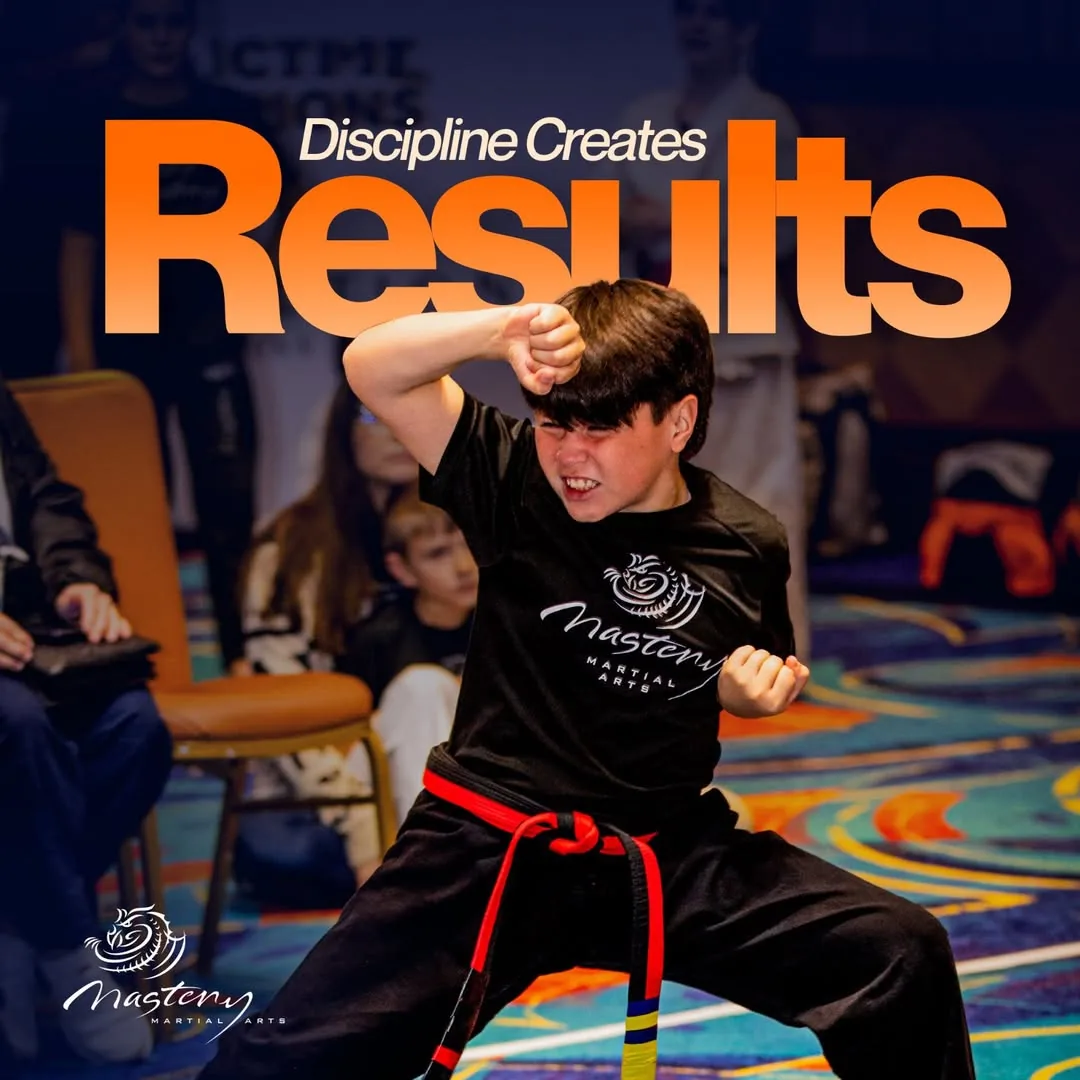
Somewhere around the third “no screens for a week!” every Troy parent notices the same thing: the punishments are escalating and the behavior is not changing. By Thursday the tablet is back, everyone feels guilty, and the lesson, whatever it was, never arrived. After 34 years of running a school where consequences do change behavior, this is the difference between consequences that work for kids and the ones that just make everyone miserable.
Why the Usual Consequences Stop Working
Timeouts and confiscations fail for the same three reasons: they’re disconnected from the behavior (losing Minecraft over unbrushed teeth teaches nothing about teeth), they’re emotional (delivered at peak parent-anger, so the child files them under “mom lost it,” not “I made a choice”), and they’re inconsistent (enforced on tired days, forgotten on good ones, which turns discipline into a weather system kids wait out).
The American Academy of Pediatrics’ discipline guidance lands the same place decades of classroom and dojo experience does: consequences teach when they are immediate, related, and calm. They corrode trust when they are delayed, arbitrary, and hot.
The 4 Rules of Consequences That Work for Kids
Rule 1: Connected beats big
The consequence should live in the same universe as the behavior. Threw the toy? The toy rests. Rude at dinner? Dinner conversation continues without your input for ten minutes. Homework skipped? Screens wait until it isn’t. Connection is what turns a consequence from “parent revenge” into “cause and effect,” and cause-and-effect is the lesson.
Rule 2: Immediate and small beats delayed and huge
“No screens for a month” is a sentence you’ll commute by Wednesday, and kids know it. Two minutes sitting out, enforced every time, changes behavior faster than any nuclear option, because certainty teaches and severity just frightens. In class, our biggest consequence is sitting out one drill. It works on the wildest 7-year-old in Troy, because it is boring, instant, and certain.
Rule 3: Calm delivery or it doesn’t count
A consequence delivered while yelling is experienced as an attack, and the child’s brain switches to defense instead of reflection. It is the same threat-mode problem from why yelling doesn’t work. Referee voice: name the choice, state the consequence, move on. “You kept the tablet after time was up, so it’s done for today. You can try again tomorrow.” No lecture. The lecture is what lets kids recast themselves as the victim of your mood.
Rule 4: The way back matters more than the penalty
Every consequence should come with a door: what earning it back looks like. “When the toys are picked up, the TV comes back.” This is the difference between punishment (you are bad) and discipline (you made a choice, and here is the path). Kids who know the way back stop fighting the consequence and start walking the path . The whole philosophy is in how to teach kids discipline without punishment and how kids learn emotional regulation.
Punishment asks “how much pain makes this stop?” Discipline asks “what does this child need to experience to choose another way?” The second question has better answers.
The Consequence Most Parents Never Try: Letting Reality Do It
Some of the best consequences require you to do nothing. Refused a coat? Cold recess makes the argument better than you can. Did not pack the karate bag? Borrowing a loaner uniform once teaches the lesson. Natural consequences, allowed to land while stakes are small, without rescue and without “I told you so,” build judgment that no imposed consequence can. Your job is to stay warm and curious afterward: “That was rough. What’s your plan for next time?” (This is also how effort-lessons land for older kids. See letting the zero arrive.)
Putting It Together This Week
- Pick your family’s two most repeated battles, and stop at two
- In peacetime, decide the connected, small, immediate consequence for each, plus the way back
- Tell your child in advance, one time, in a calm voice. No ambush discipline.
- Enforce every time for two weeks, referee-voice only, and watch what consistency does
More parent playbooks at the Parent Resources hub. If you want to watch consistent, calm consequences run a room of thirty kids, our viewing window is open every class.
Free Class · Troy, MI
See it for yourself.
Bring your child in for a free introductory lesson and 30 free days. No obligation to continue.
Get My Child’s Free 30-Day Pass →3656 Rochester Road, Troy · (248) 247-7353
For Parents
See our answers first on Google
Google now lets you choose the websites you trust most. The ones you choose move to the top of your search results. Add us, and our articles on focus, confidence, and bullying show up first, right when you’re looking for help. It takes ten seconds, and you can undo it anytime.
Make Us a Preferred SourceOpens Google. Tap the search box, then check the box next to “Mastery Martial Arts - Troy.”