Mastery Martial Arts · Troy, MI
Executive Function Skills for Kids: The Complete Guide by Age
Executive Function Series · Troy, MI
The mental tools behind planning, focus, memory, and follow-through — what each one is, and what’s realistic at every age.
Start With the Guide★★★★★4.9Google rating277Google reviews34+years in Troy, MI
The Basics
What Are Executive-Function Skills?
Executive-function skills are the mental tools your child uses to get things done: to remember instructions, start a task, stay organized, manage time, and stick with something hard. They develop slowly across childhood, which is why a child can be capable in one area and completely scattered in another.
This is the deep-dive companion to our complete parent’s guide to executive function. Below, we break down each skill and what to expect by age — so you know what’s a genuine gap and what’s just a brain still under construction.
The Foundation
The 3 Building Blocks
Every executive-function skill traces back to these three roots.
1Working Memory
Holding and using information in the moment. It’s why a child loses step 3 of a 3-step instruction. (Deep dive: Kids Who Forget Everything.)
2Cognitive Flexibility
Shifting gears between tasks, rules, or perspectives without getting stuck or upset.
3Inhibitory Control
Pausing the first impulse to make room for a better one — the root of focus and self-control.
What to Watch For
The 8 Skills Parents Should Know
- 1. Task initiation — getting started without endless reminders.
- 2. Planning & prioritizing — mapping steps and knowing what comes first.
- 3. Organization — keeping track of materials, spaces, and assignments.
- 4. Time management — sensing how long things take and pacing accordingly.
- 5. Working memory — holding instructions long enough to act on them.
- 6. Flexibility — adapting when plans or rules change.
- 7. Self-control — resisting distraction and impulse.
- 8. Self-monitoring — checking your own work and noticing mistakes.
Age by Age
What’s Realistic at Each Age
Expectations matter. Here’s what’s developmentally normal at each stage.
AGES 3–5Heavy Support
Very short attention spans and big reliance on you. Wins look like following a 2-step instruction and waiting a short turn. Routines and visual cues do the heavy lifting.
AGES 6–9Building With Scaffolding
Kids can follow multi-step routines and begin simple planning — but still need checklists and reminders. Forgetting and mess here are normal, not defiance.
AGES 10–12Demands Outpace Skills
More independence, but school load jumps faster than the skills. This is when “smart but disorganized” gets obvious. (See Smart Kids & Organization.)
TEENSCapable but Inconsistent
Real self-management is possible, yet the prefrontal cortex matures into the mid-20s. Expect strong one week, scattered the next.
What Helps
How to Build These Skills (Without Nagging)
▷Externalize It
Checklists, whiteboards, and a launch pad by the door replace “just remember.”
▷Chunk Tasks
Break big jobs into visible steps to teach planning directly.
▷Make Time Visible
Timers turn abstract minutes into something kids can manage.
▷Lock In Routines
Predictable sequences become automatic habits. (Why Children Need Structure.)
▷Use Structured Activity
Activities that demand listening, sequencing, and self-control train these skills. (Martial Arts & Executive Function.)
▷Separate Skill From Worth
Make clear that being disorganized isn’t a character flaw — it’s a skill that needs building.
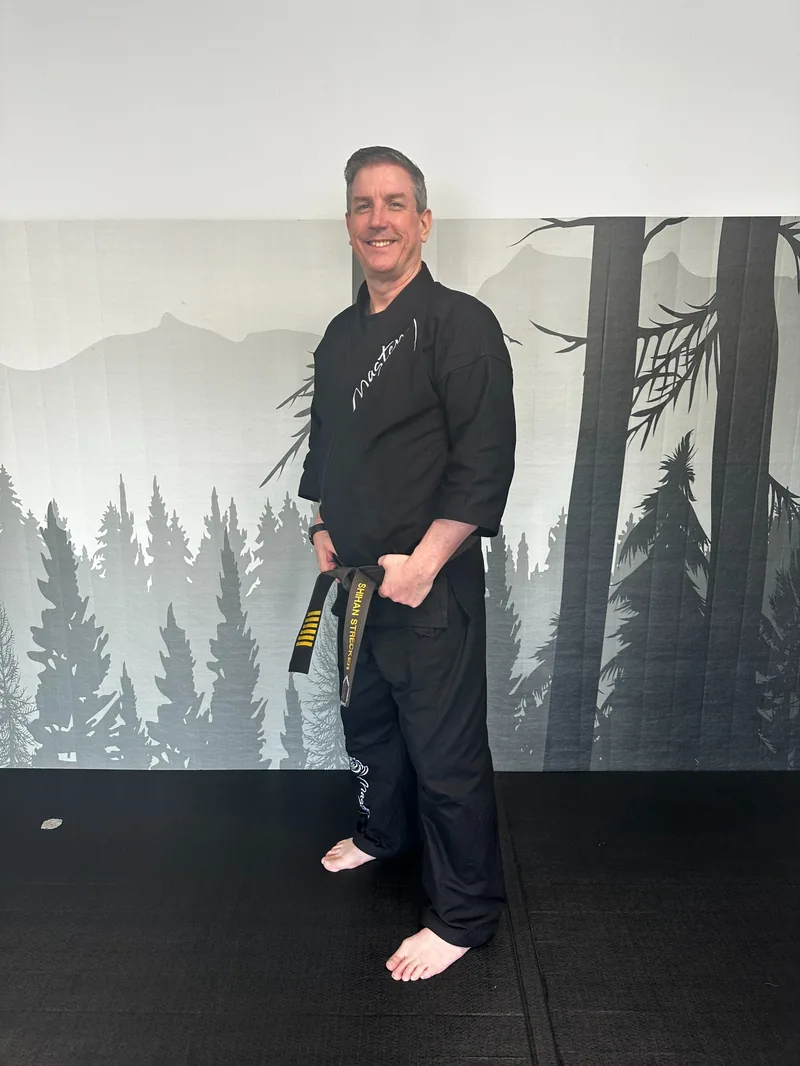
From the Chief Instructor
Skills Are Built With Reps, Not Reminders
In 34 years of teaching kids in Troy, I’ve learned that you can’t lecture a child into being organized. These are skills — like a front kick or reading — and skills are built through repetition with feedback.
“The kids who turn it around aren’t the ones who get yelled at more. They’re the ones who get to practice planning, remembering, and following through, over and over, in an environment that makes it feel like a win.”That’s exactly the environment a good martial arts class creates — and it’s why parents tell me the changes show up at home, in the backpack, and on the report card.
Keep Reading
Continue the Series
Start Here: The EF Guide
The complete parent’s guide to executive function in children.
Read the guide →Martial Arts & Executive Function
How structured training builds focus, memory, and self-control.
Read the article →Why Smart Kids Struggle With Organization
Why intelligence and organization are separate skills.
Read the article →Kids Who Forget Everything
The working-memory explanation behind constant forgetting.
Read the article →Why Children Need Structure
How routine becomes the scaffolding for self-discipline.
Read the article →Parent Resources Hub
Our full library of guides on confidence, focus, and discipline.
Visit the hub →Questions Parents Ask
Parent FAQ
Which executive-function skill develops first?
The roots — working memory and impulse control — begin in the toddler years, while higher-level planning and time management mature much later. That’s why young kids need so much external structure.
My child is great at one skill and terrible at another. Is that normal?
Completely. Executive-function skills develop unevenly. A child can plan beautifully yet have weak working memory, or be organized but struggle to get started. Target the specific lagging skill.
Can these skills be taught, or are kids just born with them?
They’re taught and practiced. Unlike raw intelligence, executive-function skills respond strongly to routine, scaffolding, and structured activities.
About the Author
Denny Strecker, Chief Instructor
Denny Strecker has taught children focus, organization, confidence, and self-discipline at Mastery Martial Arts in Troy, Michigan since 1992 — working with thousands of Troy-area families and earning a 4.9 Google rating with 277 Google reviews. He is the author of two Amazon best-selling parenting books, How to Double Your Child’s Confidence in Just 30 Days and From Chaos to Calm: How to Instill Focus and Discipline in Your Child, and the creator of the Personal Power Plans.
Mastery Martial Arts · 3656 Rochester Road, Troy, MI 48083 · (248) 247-7353
Free 30-Day Pass · Troy, MI
Build These Skills With Structured Practice
At Mastery Martial Arts in Troy, kids get reps at listening, planning, and following through in every class — the real-world practice that builds executive function.
Or explore more guides on our Parent Resources hub · (248) 247-7353 MASTERY MARTIAL ARTS · TROY
Helping Troy children build confidence, focus, and resilience since 1992.
★★★★★ 4.9 · 277 Google reviewsPrograms
Tiny Tigers (3–4)Little Dragons (5–6)Kids Martial Arts (7–9)Pre-Teen (10–12)Teen & Leadership (13–17)Parent Guides
Executive FunctionEF Skills for KidsSmart but DisorganizedKids Who ForgetParent ResourcesVisit Us
3656 Rochester RoadTroy, MI 48083(248) 247-7353© 2026 Mastery Martial Arts™, Troy MI · Helping Children Build Confidence Since 1992Related reading: My Child Is Smart But Won’t Apply Themselves • Why Structure Helps Kids Focus
Free Class · Troy, MI
See it for yourself.
Bring your child in for a free introductory lesson and 30 free days. No obligation to continue.
Get My Child’s Free 30-Day Pass →3656 Rochester Road, Troy · (248) 247-7353
For Parents
See our answers first on Google
Google now lets you choose the websites you trust most. The ones you choose move to the top of your search results. Add us, and our articles on focus, confidence, and bullying show up first, right when you’re looking for help. It takes ten seconds, and you can undo it anytime.
Make Us a Preferred SourceOpens Google. Tap the search box, then check the box next to “Mastery Martial Arts - Troy.”