Mastery Martial Arts · Troy, MI
How Martial Arts Improves Executive Function in Kids
Executive Function Series · Troy, MI
Why structured training is one of the most effective ways to build the focus, memory, and self-control behind organization and follow-through.
Read the Science★★★★★4.9Google rating277Google reviews34+years in Troy, MI
The Brain Science
Why Movement Builds the Brain
Martial arts executive function training is one of the most effective ways to build the brain’s management system. Executive function lives in the prefrontal cortex, which keeps developing into the mid-20s (the full picture is in our parent’s guide to executive function). Researchers have repeatedly found that physical activity which also demands attention, memory, and self-regulation — not just running around, but thinking while moving — strengthens these systems more than exercise alone.
Martial arts is a textbook example of this “cognitively engaged” exercise. A child has to listen to instructions, hold a sequence in mind, control their body and impulses, adapt to a partner, and self-correct — all at once, repeatedly, with immediate feedback. That’s the precise recipe research links to executive-function gains.
Three Skills, One Class
Martial Arts Executive Function: The Core Skills Trained Every Class
Executive function breaks into three core skills. A single martial-arts class trains all three.
1Working Memory
Students remember and reproduce multi-step sequences — forms, combinations, drills. That’s working memory under load, the same skill behind remembering instructions and assignments.
2Inhibitory Control
The bow, the ready stance, waiting for the command before moving — every ritual rehearses pausing the impulse. That pause is the foundation of focus.
3Cognitive Flexibility
Drills change, partners change, the instructor calls a new technique mid-flow. Kids practice shifting gears smoothly — the flexibility they need when plans change.
Why It Sticks
Why It Works When Reminders Don’t
At home, building executive function is hard because the stakes feel low and feedback is delayed. In class, the structure does the teaching.
- Clear expectations — every child knows exactly what’s required, removing the ambiguity that derails kids with weak executive function.
- Immediate feedback — a technique either works or it doesn’t, so self-monitoring is built in.
- Repetition with purpose — the same skills get hundreds of reps, which is how the brain wires a habit.
- Visible progress — belt ranks turn long-term goals into concrete steps, teaching planning and follow-through.
- Motivation built in — kids practice self-control because they want to advance, not because they’re told to.
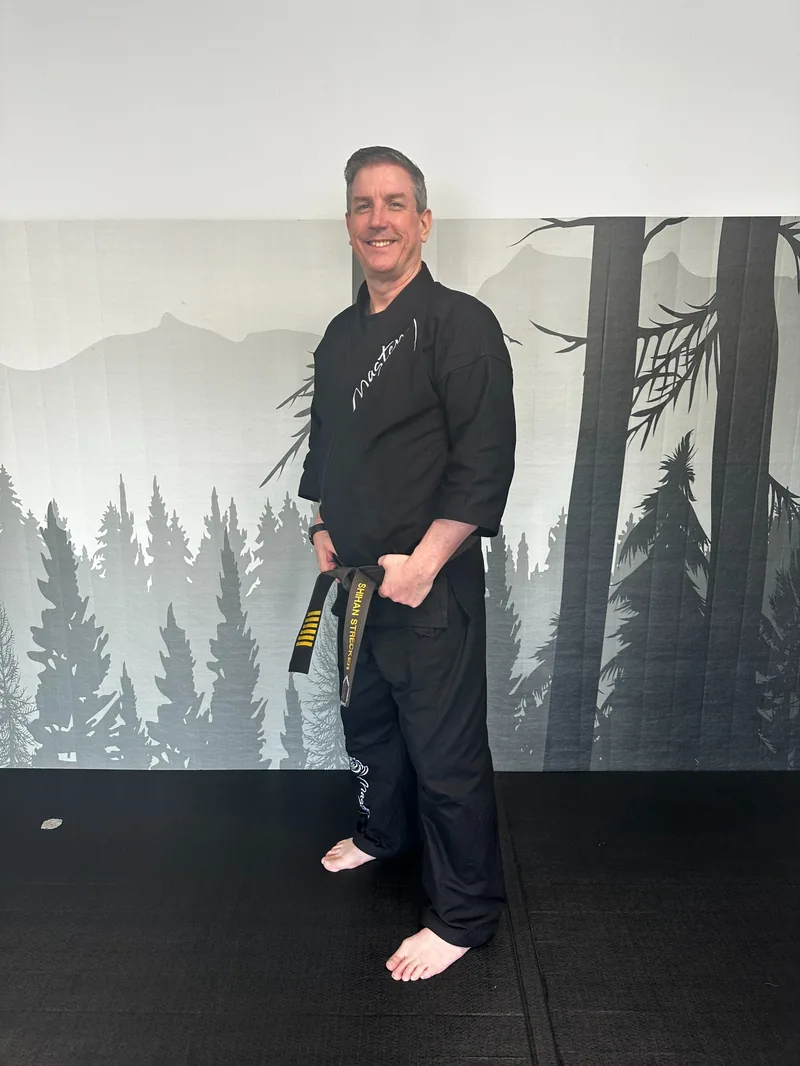
From the Chief Instructor
What I See Change at Home
Parents don’t enroll their kids to win trophies. They come to me because mornings are a battle, homework is a war, and their bright kid can’t seem to hold it together. Within a few months, that’s usually the first thing that changes.
“The fidgety, scattered kids are often the ones who transform the most. When a child finally gets to practice focus and self-control in a place that rewards it, the calm and the follow-through start showing up everywhere — at the dinner table, in the backpack, on the report card.”It isn’t magic. It’s executive function getting the structured reps it never had — in an environment kids actually look forward to.
The Payoff
What Parents Actually See
When executive function improves, the changes show up off the mat: following multi-step instructions without five reminders, starting homework with less resistance, keeping track of belongings and assignments (less of the constant forgetting), staying focused longer, and handling changes in plans with fewer meltdowns.
These aren’t personality changes — they’re the visible result of skills that finally got enough practice. It’s the consistency parents struggle to enforce at home (see Why Children Need Structure), delivered somewhere kids want to be.
Keep Reading
Continue the Series
Start Here: The EF Guide
The complete parent’s guide to executive function in children.
Read the guide →Executive Function Skills for Kids
The core skills, by age, with what to expect at each stage.
Read the article →Why Smart Kids Struggle With Organization
Why intelligence and organization are separate skills.
Read the article →Kids Who Forget Everything
The working-memory explanation behind constant forgetting.
Read the article →Why Children Need Structure
How routine becomes the scaffolding for self-discipline.
Read the article →Parent Resources Hub
Our full library of guides on confidence, focus, and discipline.
Visit the hub →Questions Parents Ask
Parent FAQ
Is martial arts good for kids with ADHD or focus issues?
Many parents find it especially helpful. The clear structure, immediate feedback, and built-in movement fit how these kids learn. It complements professional support — it’s not a replacement for it.
How long until I see a difference?
Most parents notice the first changes — calmer focus, less homework resistance — within a few months of consistent attendance. Deeper, durable gains build over years, the way any skill does.
Won’t a martial-arts class just wind my child up more?
When the school teaches character first, the opposite happens. Structured classes channel energy into focus and self-control. The most energetic kids often become the calmest in the room.
About the Author
Denny Strecker, Chief Instructor
Denny Strecker has taught children focus, organization, confidence, and self-discipline at Mastery Martial Arts in Troy, Michigan since 1992 — working with thousands of Troy-area families and earning a 4.9 Google rating with 277 Google reviews. He is the author of two Amazon best-selling parenting books, How to Double Your Child’s Confidence in Just 30 Days and From Chaos to Calm: How to Instill Focus and Discipline in Your Child, and the creator of the Personal Power Plans.
Mastery Martial Arts · 3656 Rochester Road, Troy, MI 48083 · (248) 247-7353
Free 30-Day Pass · Troy, MI
See Executive Function Built in Real Time
At Mastery Martial Arts in Troy, every class is structured practice in focus, memory, and self-control. Watch the difference it makes for your child.
Or explore more guides on our Parent Resources hub · (248) 247-7353 MASTERY MARTIAL ARTS · TROY
Helping Troy children build confidence, focus, and resilience since 1992.
★★★★★ 4.9 · 277 Google reviewsPrograms
Tiny Tigers (3–4)Little Dragons (5–6)Kids Martial Arts (7–9)Pre-Teen (10–12)Teen & Leadership (13–17)Parent Guides
Executive FunctionEF Skills for KidsSmart but DisorganizedKids Who ForgetParent ResourcesVisit Us
3656 Rochester RoadTroy, MI 48083(248) 247-7353© 2026 Mastery Martial Arts™, Troy MI · Helping Children Build Confidence Since 1992Free Class · Troy, MI
See it for yourself.
Bring your child in for a free introductory lesson and 30 free days. No obligation to continue.
Get My Child’s Free 30-Day Pass →3656 Rochester Road, Troy · (248) 247-7353
For Parents
See our answers first on Google
Google now lets you choose the websites you trust most. The ones you choose move to the top of your search results. Add us, and our articles on focus, confidence, and bullying show up first, right when you’re looking for help. It takes ten seconds, and you can undo it anytime.
Make Us a Preferred SourceOpens Google. Tap the search box, then check the box next to “Mastery Martial Arts - Troy.”