
Mastery Martial Arts · Troy, MI
Is Martial Arts Right for Your Child?

Is Martial Arts Right for Your Child? A Complete Parent Guide
How to Know If Martial Arts Is Right for Your Child
Many parents wonder: is martial arts right for your child? The answer depends on your child’s personality, goals, and what you’re hoping to get out of the experience. This guide helps you decide if martial arts is right for your child by walking through the key factors every parent should consider.
When asking is martial arts right for your child, consider their age, temperament, and what activities they currently enjoy. Martial arts is right for your child if they need structure, confidence, focus, or a physical outlet. It works for shy kids, anxious kids, energetic kids, and kids who struggle in team settings.
What Parents Say After Asking Is Martial Arts Right for Your Child
Parents who asked is martial arts right for your child and enrolled their kids at Mastery Martial Arts consistently report improvements in focus, confidence, and self-discipline within the first few months.
Making the Decision: Is Martial Arts Right for Your Child?
If you are still asking is martial arts right for your child, the best way to find out is to try a free introductory lesson at Mastery Martial Arts.
QUICK ANSWER FOR PARENTS
Is Martial Arts Right for Your Child?
- Short answer: Yes, for most kids.
- Best starting age: As young as 3 — we have programs for every stage from Tiny Tigers through teens.
- Top benefits: Confidence, focus, discipline, and resilience.
- How to know if your child is ready: Read the full guide below.
- Next step: Try a free introductory class at our Troy, MI location — no pressure, no commitment.
What You’ll Learn in This Guide:
- Introduction: The Big Question
- What Age to Start
- What Actually Happens in Class
- Karate vs. Team Sports
- The Real Benefits of Martial Arts
- Signs Your Child is Ready
- The Mastery Martial Arts Difference
- Why Parents in Troy Choose Martial Arts
- When Martial Arts Might Not Be the Right Fit
- What Results Should Parents Expect (and How Fast)
- Frequently Asked Questions (FAQ)
If you are wondering is martial arts right for your child, you are not alone. Many parents ask is martial arts right for your child when looking for activities. Deciding is martial arts right for your child depends on their needs. To know is martial arts right for your child, look at the benefits. Is martial arts right for your child? Yes, it builds confidence. When asking is martial arts right for your child, consider focus. We help parents answer is martial arts right for your child. Is martial arts right for your child? Let’s find out.
Is Martial Arts Right for Your Child? (Complete Parent Guide)
Is martial arts right for your child? The answer depends on what your child needs most right now — and what you’re hoping they’ll build as they grow. This guide breaks it down clearly for every type of kid.
Introduction: The Big Question Every Parent Asks
One of the most important things parents discover early on is that “is martial arts right for your child” isn’t a yes-or-no question. It’s a conversation about environment, values, and the kind of adult you’re working to raise.
As a parent, you want the very best for your child. You want them to grow up confident, disciplined, and resilient. You want them to develop skills that will serve them for a lifetime. So when you ask yourself, “Is martial arts right for your child?”, you’re really asking more than whether they’ll learn to punch and kick. You’re wondering if this ancient practice can support their overall development, their social skills, their emotional wellbeing, and their physical health. We’ve been answering that question for families at our kids karate program in Troy, MI for over 34 years — and the answer, for most kids, is a clear yes.
Parents here in Troy often tell us the same thing: they didn’t come to us looking for a sport. They came looking for a solution. A child who wouldn’t listen. A kid who melted down at the first sign of frustration. A teenager who had stopped believing in themselves. And what they found at our kids karate classes in Troy was something they hadn’t expected: a structured, caring environment that actually changed how their child showed up in the world.
My name is Mr. Strecker, and I’m a child development expert here at Mastery Martial Arts in Troy, MI. After working with hundreds of kids here in Troy over more than 34 years, I’ve seen children transform through martial arts—not just physically, but mentally and emotionally. Martial arts is often misunderstood as just a sport, or a way to defend yourself. But it’s so much more. It’s a journey of growth, a structured environment where your child can thrive, and a community that supports their character development.
In this ultimate parent guide, I’m going to walk you through everything you need to know about martial arts for your child. I’ll explain the right age to start, what happens in class, how martial arts compares to team sports, the real benefits your child will gain, how to tell if they’re ready, and honestly — when martial arts might not be the right fit. I’ll also share what makes our kids karate classes in Troy MI unique and effective.
By the end, you’ll have a clear, detailed understanding of whether martial arts is the right choice for your child — and how it can become a powerful tool in their development. Not all martial arts programs are the same, and choosing the right one in Troy can make a real difference in what your child actually gets out of it.
Let’s dive in.
START YOUR CHILD’S TRANSFORMATION TODAY ►
What Age to Start: Understanding Developmental Stages
Many parents who ask “is martial arts right for your child” are actually asking whether their specific child — the one who’s shy, or hyperactive, or easily frustrated — can handle a martial arts class. The answer, in almost every case, is yes.
One of the most common questions I hear from parents here in Troy is, “When is the right age for my child to begin martial arts?” The answer depends on your child’s developmental stage, both physically and mentally. Martial arts can be adapted to meet the needs of children at various ages, but understanding what your child is capable of and what they can absorb at each stage is crucial. Families across the Troy area — from parents near Troy Athens High School to those closer to Boulan Park Middle School — all ask the same question. The good news is that our kids karate program in Troy Michigan has a path for every child, starting as young as age three.
Ages 3–4: Building the Foundation Early (Tiny Tigers)
You might be surprised to learn that three and four year olds can absolutely thrive in martial arts — when the program is designed specifically for them. Our Tiny Tigers program for ages 3 and 4 uses short, high-energy 30-minute classes built around listening, following directions, and basic body coordination. There’s no pressure, no complex technique — just small wins that add up fast.
Parents in this age group often tell us they started because their child had too much energy and not enough focus. Within weeks, they notice their child waiting their turn, trying new things without a meltdown, and walking a little taller. That’s the Mastery difference at work, even at age three.
Ages 4–6: The Foundation of Movement and Focus (Little Dragons)
At this preschool and kindergarten stage, children are rapidly developing their gross motor skills: running, jumping, balancing, and coordination. Their attention span is short, typically around 10 to 15 minutes, and they are learning through play and repetition.
Our Little Dragons program for ages 4 to 6 focuses on basic movements, fun drills, and simple techniques. The goal is to enhance coordination, balance, and body awareness, while introducing the concept of listening and following instructions. For example, we might play games that involve balance challenges or basic striking motions, all wrapped in a fun, supportive environment.
Psychologically, children at this age are beginning to recognize rules and social cues. Martial arts helps reinforce the idea of respect—bowing to the instructor or partners—and the importance of patience and waiting their turn. It also starts teaching impulse control, which is a critical foundation for later self-regulation.
One story I often tell parents is about a 5-year-old student, Emma, who struggled with sitting still and focusing in her preschool class. After a few months of martial arts, her teacher noticed Emma was more attentive and calm during storytime. That’s the power of early martial arts training—not just physical skills, but emotional and cognitive growth.
Ages 7–9: Developing Discipline and Social Skills
Children in early elementary school have longer attention spans, improved motor skills, and a growing desire to master new challenges. This is a prime age for martial arts because kids can start to learn more structured techniques and begin understanding the concepts of discipline and perseverance. Parents in the Troy area consistently tell us this is the age where they start noticing real changes — at home, at school, and in how their child carries themselves.
Our karate classes for 7 to 9 year olds introduce more complex patterns, known as forms or katas, which require memorization, coordination, and focus. Kids also start partner drills, learning controlled contact and teamwork within a martial arts context.
From a developmental psychology perspective, children aged 7–9 are forming their self-identity and are highly influenced by peer relationships. Martial arts fosters a positive peer group where respect, encouragement, and accountability are central. This can be a game-changer for children who might struggle in traditional team environments or social settings.
Take Jake, an 8-year-old who had difficulty making friends and often felt left out of team sports. After joining martial arts, he found a community where individual progress was celebrated, and he gained confidence through mastering new skills. His parents reported improved self-esteem and social interactions at school.
Ages 10–13: Building Resilience and Leadership
Preteens are capable of deeper understanding and reflection. They can handle more intensive physical training and begin to grasp the philosophy behind martial arts. This age group benefits greatly from martial arts training that emphasizes goal-setting, resilience, and leadership.
Our leadership program for ages 10 to 12 focuses on refining technique, sparring with safety and control, and character development lessons. Children learn how to set personal goals, such as progressing through belt ranks, which teaches delayed gratification and persistence.
Psychologically, children entering adolescence often face challenges with self-doubt and peer pressure. Martial arts offers a structured outlet for self-expression, stress relief, and positive self-discipline. It builds inner strength that can help navigate the complexities of this life stage.
One example is Mia, a 12-year-old who was struggling with anxiety and negative self-talk. Through consistent martial arts training, she developed coping skills and self-confidence that transformed her attitude both at home and school.
For more on what to expect at each age, check out our detailed blog post on What Age to Start Martial Arts for Kids.
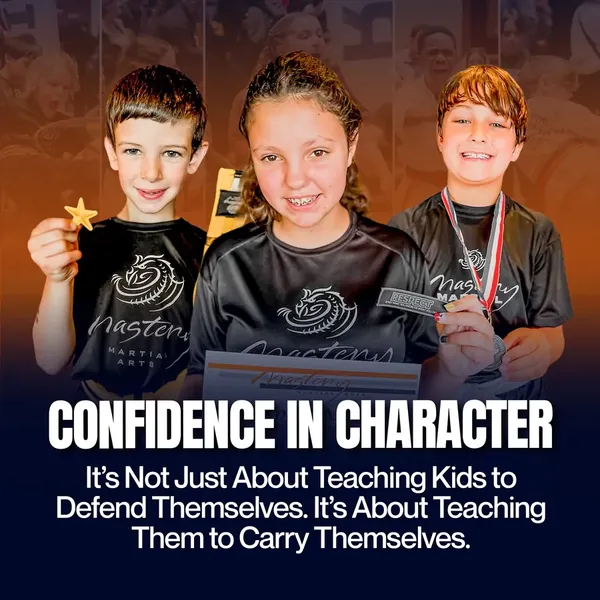
What Actually Happens in Class: Demystifying the Experience
Research confirms what martial arts instructors have seen for decades: structured martial arts training builds focus, impulse control, and emotional regulation — all skills that directly help children succeed in school and life. Is martial arts right for your child? The evidence says it probably is.
Many parents wonder, “What will my child actually do in martial arts class?” It can sound intimidating or mysterious if you haven’t experienced it firsthand. I want to break down the structure and atmosphere of a typical class at our martial arts classes for kids in Troy so you know exactly what your child will encounter.
Class Structure: Routine and Repetition
Our classes follow a consistent structure to help children feel safe and know what to expect. This includes a warm-up, skill drills, instruction on techniques, partner work, and a cool-down or reflection period.
- Warm-Up: We start with light movement activities to get the blood flowing and prepare the body for exercise. This might include jumping jacks, stretches, or fun agility drills.
- Skill Drills: Children practice specific martial arts techniques—strikes, blocks, stances—in a controlled, repetitive way to develop muscle memory.
- Technique Instruction: Our instructors demonstrate new forms or combinations, breaking them down into manageable steps.
- Partner Work: Kids work in pairs to practice controlled sparring or drills that teach respect, timing, and cooperation.
- Cool-Down and Reflection: Classes end with slow stretches and often a brief talk about the lesson’s focus, such as respect, patience, or perseverance.
By following this routine, children learn the value of consistency and discipline. They also gain confidence through mastering skills bit by bit.
Discipline and Focus: The Cornerstones
Martial arts classes demand focus. Unlike many free-form activities, martial arts requires children to listen carefully, follow instructions, and practice self-control. This is not about punishment but about creating an environment where children can learn to manage their behavior and attention.
For example, when learning a new form, a child must pay attention to the sequence, timing, and precision of movements. This trains their brain to focus on details and follow through on tasks.
Discipline in class also means respecting the instructor, peers, and the space. Children learn to wait their turn, encourage others, and handle setbacks without frustration.
Fun and Engagement: Learning Through Play
Despite the focus on discipline, our classes are designed to be fun and engaging. We incorporate games, challenges, and positive reinforcement to keep children motivated.
For younger children, this might mean obstacle courses or “ninja challenges.” For older kids, it could be goal-oriented competitions like belt tests or sparring matches that reward progress.
One parent shared how their son, who was initially shy and reluctant, began looking forward to class because of the supportive and enjoyable atmosphere. This balance of fun and structure is key to sustained participation.
For a deeper dive into the class experience, check out our blog post on What Happens in Martial Arts Class.
Karate vs. Team Sports: Understanding the Differences
When parents compare options and ask “is martial arts right for your child versus team sports,” the answer usually comes down to individual attention. Martial arts gives every child a personal challenge at their exact level — no bench-sitting required.
Many parents in Troy wonder how martial arts compares to team sports like soccer, basketball, or baseball. Each has its place, but martial arts offers unique benefits that can be especially helpful for certain children. For a full breakdown, see our guide on karate vs. team sports for kids.
Individual Growth vs. Team Dynamics
Team sports emphasize collaboration and collective success. While these are valuable skills, some children find team dynamics challenging. They may struggle with the pressure of competition, fear of failure in front of peers, or difficulty fitting into a group.
Martial arts focuses on individual progress within a supportive community. Your child’s success is measured by their own improvement, not by the team’s performance. This can be empowering for children who are naturally introverted, sensitive, or who need more control over their environment. It’s one reason so many local kids in Troy Michigan end up thriving here after struggling in traditional team settings. Our karate classes for kids in Troy are built specifically around individual growth inside a strong, supportive community.
For example, I’ve worked with children who left team sports feeling discouraged because they didn’t make the starting lineup or felt excluded. In martial arts, they found a place where their effort and dedication were recognized and rewarded, regardless of others’ performance.
Learning Pace and Personal Accountability
In team sports, the pace is often dictated by the game or coach. Martial arts allows children to progress at their own rate. They set personal goals, such as earning the next belt, and take responsibility for their growth.
This nurtures a strong internal locus of control, meaning children learn that their success depends largely on their effort and attitude, not external factors.
Conflict Resolution and Self-Control
Team sports can sometimes escalate frustrations or aggression, especially in competitive settings. Martial arts, on the other hand, teaches conflict resolution through self-discipline and respect. Children learn that strength is not about dominance but control, and that true confidence comes from mastery over themselves.
Not all martial arts schools in Troy are the same, either. Some focus on competition. Some focus on sport. We focus on your child’s character. For more insights on the activity comparison, see our blog on Karate vs. Team Sports: Which is Better for Your Child? And when you’re ready to compare schools, read our honest breakdown of martial arts schools in Troy, MI to see exactly what sets us apart.
BOOK YOUR CHILD’S FIRST CLASS ►
The Real Benefits of Martial Arts: More Than Just Physical Fitness
Is martial arts right for your child if they have sensory issues or get overwhelmed easily? Absolutely — the structured, predictable format of class is actually therapeutic for many kids who struggle in less structured environments.
Martial arts offers a wide range of benefits that extend well beyond physical fitness. Let’s explore the four pillars that are most impactful for children’s development: confidence, focus, discipline, and resilience. These are the exact qualities parents in the Troy area come to us looking for — and the ones we deliver, consistently, through our structured kids karate program in Troy.
We see this all the time with kids in the Troy area. A child comes in bouncing off the walls, and within a few months their teacher is calling home to say something changed. That’s not a coincidence. It’s the result of a program that’s been refined over more than 34 years of working with children right here in this community.
A note from Mr. Strecker: With over 34 years of experience working with kids in Troy, I’ve seen firsthand what happens when a child finds the right environment. Confidence, focus, and discipline aren’t things you can force. But you can build a structure where they grow naturally. That’s what we’ve spent three decades learning how to do. See how our Troy program works — and why it gets the results it does.
Confidence: Building Inner Strength
Confidence is perhaps the most noticeable benefit parents observe. As children master techniques, earn belts, and overcome challenges, they develop a strong sense of self-worth.
Unlike instant gratification activities, martial arts requires consistent effort. When children see their progress, it reinforces the idea that hard work pays off. This confidence transfers into other areas of life, such as school, social situations, and family interactions. We go deep on this topic in our guide on how martial arts builds confidence in kids.
One teenager who trained with us shared how martial arts helped him overcome bullying. The skills and confidence he gained gave him the courage to stand up for himself and others. At our Troy location, many students start because a parent noticed their child shrinking — and they leave standing taller in every room they walk into.
Focus: Strengthening Attention and Mindfulness
Martial arts trains the mind as much as the body. Children learn to concentrate on precise movements and sequences, developing their ability to focus for extended periods.
This improved focus can be particularly beneficial for children with attention challenges. The structured environment and clear expectations provide a framework that supports their needs. We see this all the time with kids in the Troy area — children who struggle to sit still in school walk into our dojo and find that the structure actually works for them, not against them. If your child struggles with attention or has been diagnosed with ADHD, read our detailed article on martial arts for kids with ADHD — the results parents see are remarkable.
Discipline: Learning Self-Control and Responsibility
Discipline in martial arts is about more than following rules. It’s about learning to control impulses, take responsibility for actions, and persist even when tasks are difficult.
These lessons prepare children for real-world challenges. Discipline helps them manage homework, maintain healthy habits, and build positive relationships. Parents here in Troy often tell us that the first place they notice a change isn’t in the dojo — it’s at the dinner table, or during homework time, or when their child handles a “no” without falling apart. For a practical look at how this works, see our article on how karate teaches discipline to kids.
Resilience: Developing Grit and Emotional Strength
Martial arts teaches children how to handle setbacks gracefully. Whether it’s not passing a belt test or losing a sparring match, children learn that failure is just a step toward growth.
Building resilience helps children bounce back from adversity and maintain a positive outlook. This emotional strength is invaluable throughout life. We see it happen every week with kids right here in Troy Michigan — children who come in timid and leave with a quiet confidence that shows up everywhere.
For a deeper understanding of these benefits, visit our blog on Martial Arts Benefits for Kids.
Quick Summary: Is Martial Arts Right for Your Child?
Here’s a fast reference for parents who want the short version.
| Your Child… | Martial Arts Likely Helps With… |
|---|---|
| Struggles with confidence | Belt progression builds real, earned self-worth |
| Has trouble focusing | Structured repetition trains attention span |
| Struggles in team settings | Individual progress, no bench-sitting |
| Has too much energy | Physical outlet with built-in discipline |
| Is shy or anxious | Safe, supportive environment to build social skills |
| Needs structure at home | Consistent routines and clear expectations carry over |
Want to see which program fits your child’s age? Explore our Troy programs here.
Signs Your Child is Ready: Behavioral Cues to Watch For
At Mastery Martial Arts in Troy, MI, we’ve worked with hundreds of families navigating this exact question. The parents who ask “is martial arts right for your child” and decide to try it rarely regret it.
Not every child is ready to start martial arts at the same time. Here are some behavioral signs that indicate your child might be ready to benefit from martial arts training.
- Curiosity About Martial Arts: Your child expresses interest in learning karate, taekwondo, or other martial arts styles. This intrinsic motivation is a great indicator of readiness.
- Ability to Follow Simple Instructions: Your child can listen to and follow basic directions for short periods, which is essential for safety and learning.
- Developing Gross Motor Skills: Your child enjoys physical activity and shows coordination in running, jumping, or playing.
- Need for Structure and Routine: Your child thrives with consistent routines and clear expectations, which martial arts classes provide.
- Desire for Social Interaction in a Controlled Setting: Your child wants to engage with peers but may benefit from a structured, respectful environment.
Conversely, if your child is not yet able to focus for any length of time or is highly fearful of new environments, it might be helpful to wait or start with a trial class to assess comfort level.
Always remember that readiness is individual. We offer trial classes and consultations to help you determine the best path for your child. Check out our readiness guide for kids karate classes in Troy MI for more detail. And if you’re still on the fence, the simplest thing you can do is come see us. Our school is at 3656 Rochester Road in Troy — and we’d love to meet your family.
START YOUR CHILD’S TRANSFORMATION TODAY ►
The Mastery Martial Arts Difference: Why Our Approach Works in Troy, MI
By now you’ve seen the breadth of what this question covers. Is martial arts right for your child? If they need confidence, focus, physical activity, or simply a place where they feel seen and challenged — the answer is almost always yes.
At Mastery Martial Arts, we take a thoughtful, evidence-based approach to teaching children. Here’s what sets us apart and why families here in Troy, Michigan trust us to support their child’s growth.
Structured Curriculum Rooted in Child Development Science
Our curriculum is designed with a deep understanding of developmental stages. We tailor instruction to match your child’s physical and cognitive abilities, ensuring they are neither overwhelmed nor under-challenged. Whether your child is three years old just starting in our Tiny Tigers program or a preteen in our leadership program for ages 10 to 12, the curriculum meets them exactly where they are.
Repetition and Mastery
We emphasize repetition because it builds mastery and confidence. By practicing techniques until they become second nature, children develop muscle memory and mental focus. This approach also teaches patience and persistence.
Accountability and Goal Setting
Children are encouraged to set personal goals, such as progressing through belt ranks. This teaches accountability and helps them experience the satisfaction of achievement.
Character Development Beyond Technique
We incorporate lessons on respect, integrity, humility, and perseverance into every class. Martial arts is not just about fighting skills—it’s about developing strong character that will serve your child throughout life.
Experienced and Caring Instructors
Our instructors are not only skilled martial artists but also trained in child psychology and development. They know how to motivate children, handle challenges gently, and create a positive learning environment.
Community and Support
We foster a community where children and parents feel welcomed and supported. This sense of belonging enhances motivation and creates lifelong friendships.
Choosing Mastery Martial Arts means choosing a partner in your child’s development journey. Want to see how we compare? Read our honest comparison of martial arts schools in Troy to see what makes us different. Not all martial arts schools in Troy are built the same — and once you see the difference, it’s hard to go back.
START YOUR CHILD’S TRANSFORMATION TODAY ►
Why Parents in Troy Choose Martial Arts for Their Kids
The best way to know if martial arts is right for your child is to come in and watch a class. Every family that comes through our doors at Mastery Martial Arts in Troy, MI gets a free introductory lesson — no commitment, no pressure.
Troy, Michigan is a community that takes kids’ development seriously. Parents here are thoughtful, involved, and genuinely invested in giving their children every advantage. That’s exactly why so many families in Troy have turned to martial arts — not as a last resort, but as a first choice.
What we hear most from parents in the Troy area is this: they’re not looking for a babysitter or a sport to fill time. They’re looking for something that actually changes how their child shows up in the world. They want a child who listens better, handles frustration without melting down, and walks into a room with confidence. That’s what our kids karate classes in Troy are designed to deliver.
We’ve worked with local kids from neighborhoods all across Troy Michigan — families near Big Beaver Road, parents from the Northfield Church area, kids who go to Boulan Park, Smith Middle School, and Troy Athens. What they all have in common is that they came in looking for something, and they found it here.
The results parents in Troy tell us about most often:
- Their child started listening better at home — within the first few weeks.
- Teachers noticed a difference in focus and behavior at school.
- Their child stopped backing down from challenges and started leaning into them.
- Siblings started getting along better because one child learned to regulate their emotions.
These aren’t marketing claims. They’re the conversations we have with Troy parents every single week at 3656 Rochester Road.
And here’s the thing about martial arts in Troy specifically: the community matters. When your child trains alongside other local kids, builds relationships with instructors who know their name, and earns their belts in front of people who genuinely care — that experience is different from anything you’ll find in a gym or a rec league. It’s personal. It’s consistent. And it works.
If you’re a parent in the Troy area wondering whether this is the right fit, the honest answer is: come see for yourself. Our Troy kids karate program offers a free introductory lesson with no pressure and no commitment. You’ll know within the first class whether this is the right environment for your child.
BOOK YOUR FREE LESSON IN TROY ►
When Martial Arts Might Not Be the Right Fit
Every parent’s version of “is martial arts right for your child” looks a little different. That’s why we offer a personalized intro experience, not a one-size-fits-all pitch. We want to understand your child before you spend a dollar.
Most kids thrive in martial arts. But being honest with parents matters more to us than just selling classes. So here’s the real talk: there are situations where martial arts may not be the best starting point right now — and knowing that upfront can save everyone frustration.
Extreme Sensory Sensitivities
Children with significant sensory processing challenges may find the physical contact, noise, and fast-paced environment of a martial arts class overwhelming at first. This doesn’t mean martial arts is off the table permanently — but it may require a slower introduction, a one-on-one trial class, or coordination with an occupational therapist before starting group sessions. We’ve worked with sensory-sensitive kids in Troy successfully, but we always recommend a conversation with us first so we can set your child up to succeed.
Severe Anxiety About New Environments
Some children experience intense anxiety when placed in new social settings. If your child has a strong fear response to new people, new places, or new routines, it’s worth addressing that first — or at minimum, doing a low-pressure observation visit before committing to classes. We offer exactly that. A parent and child can come in, watch a class, meet the instructor, and get a feel for the environment with zero obligation. Many kids who seemed “not ready” were perfectly fine once they saw what actually happens in a class.
A Child Who Is Completely Uninterested
Forced participation rarely works. If your child has zero interest in martial arts and is only attending because a parent wants them to, the results will be limited. The good news is that most kids who visit our Troy location — even reluctant ones — leave wanting to come back. The environment is designed to be engaging, not intimidating. But if a child tries it and genuinely doesn’t connect with it, there’s no shame in that. Not every activity is for every kid.
The Bottom Line on Fit
If you’re unsure whether your child is ready, the best thing you can do is come in and talk to us. After working with hundreds of kids in Troy over 34 years, we can usually tell within the first conversation whether a child is likely to thrive — and we’ll always be honest with you about it. Learn more about our approach at our Troy location and reach out with any questions.
What Results Should Parents Expect (and How Fast)
Is martial arts right for your child at their current age and development level? Our instructors are trained to work with children as young as 3 and as old as 17, adapting the curriculum to each child’s needs.
This is one of the most practical questions a parent can ask — and one that doesn’t get answered honestly enough. So here’s what we actually see at our Troy location, based on working with hundreds of kids over 34 years.
Weeks 1–4: The Adjustment Period
Most kids spend the first few classes just getting comfortable. They’re learning the rules, the routines, and the culture of the dojo. Don’t expect dramatic changes yet — but do watch for small signals: a child who listens a little better, who seems a little more proud of themselves after class, who asks to go back. Those are the early signs that it’s working.
Months 1–3: The First Real Changes
This is where parents start noticing things. Not just in the dojo — at home. Teachers begin commenting on improved focus. The meltdowns get shorter. The child starts applying what they learn in class to real-life situations: taking a breath before reacting, trying again after failing, saying “yes sir” or “yes ma’am” at the dinner table without being prompted. We hear these stories from Troy parents every week.
Months 3–6: Confidence Becomes Visible
By this point, most kids have earned their first belt or two. That moment — standing in front of the class, demonstrating what they’ve learned, receiving their belt — does something to a child that’s hard to describe. They walk differently. They talk differently. The child who used to shrink in new situations starts leaning in. This is the transformation parents came looking for, and it’s real.
What If My Child Doesn’t Like It?
It happens. Not every child connects with every activity, and martial arts is no exception. If your child tries a few classes and genuinely doesn’t enjoy it, that’s okay. What we find, though, is that most kids who say they don’t want to go — before they’ve tried it — end up loving it once they’re actually in the room. The first class is almost always the hardest. After that, most kids are asking when they get to go back.
If after a genuine trial your child still isn’t connecting, we’ll have an honest conversation with you about whether to continue, adjust, or try something else. We’d rather you leave with a good experience than stay in a program that isn’t working. That’s what we mean when we say we’re a community, not just a gym.
Frequently Asked Questions (FAQ)
If you’ve been weighing this question — is martial arts right for your child — the best next step is simple: come see for yourself. Book a free trial class at Mastery Martial Arts in Troy, MI and let your child answer the question in person.
Will Martial Arts Make My Child Aggressive?
This is a common concern. Martial arts actually teaches self-control and respect, which reduces aggressive behavior. Children learn that martial arts is not about fighting but about discipline and confidence. Many parents notice a decrease in temper tantrums and frustration after their child starts training.
How Much Time Does Martial Arts Take? Will It Interfere with School and Other Activities?
We offer flexible class schedules, typically 1–2 sessions per week for beginners. Classes last about 45 minutes to an hour, which complements school and extracurricular activities without overwhelming your child. The skills learned often improve focus and time management in other areas.
What If My Child Wants to Quit?
It’s normal for children to have ups and downs in motivation. We encourage open communication to understand their feelings. Sometimes a break or a change in class routine helps. Our instructors work hard to keep classes engaging. If your child decides to quit, we support that choice but also encourage revisiting martial arts in the future.
Is Martial Arts Safe for My Child?
Safety is our top priority. Our instructors are trained in first aid and injury prevention. We emphasize controlled techniques and proper warm-ups. Protective equipment is used during sparring, and all activities are age-appropriate.
Will My Child Learn Self-Defense?
Yes, self-defense is a core part of martial arts training. However, we teach it responsibly, emphasizing avoidance, de-escalation, and respect. Our goal is to empower children, not encourage fighting.
Do Children Need Previous Athletic Experience to Start?
No experience is necessary. Martial arts welcomes beginners of all skill levels. Our classes build foundational skills progressively.
How Do Belt Ranks Work?
Belt ranks mark progress and mastery of skills. Children earn belts by demonstrating techniques and knowledge in testing sessions. This system motivates children and provides clear goals.
If you want to see exactly what they would be working toward, the karate belt order lays out all 18 belts and the character goal behind each one.
Can Martial Arts Help with Behavioral Issues?
Many parents report improvements in behavior, including reduced impulsivity and increased respect for authority. Martial arts provides structure and teaches coping skills that benefit children with behavioral challenges.
START YOUR CHILD’S TRANSFORMATION TODAY ►
So — Is Martial Arts Right for Your Child?
For most kids? Yes. Not because martial arts is magic, but because it gives children something most activities don’t: a structured, consistent environment where effort is rewarded, character is built, and every child is treated as an individual.
If your child struggles with confidence, focus, or discipline — or if you just want to give them a strong foundation before those challenges show up — martial arts is one of the most effective tools available.
Here’s what we suggest as your next step:
- Explore our kids karate classes in Troy — see the programs, the philosophy, and what makes us different.
- Compare martial arts schools in Troy — not all programs are built the same, and this guide helps you ask the right questions.
- Try a class with zero pressure — one free introductory lesson, then 30 free days of regular classes to see the results for yourself.
You don’t have to figure this out alone. Come talk to an instructor at our Troy location — we’ve been helping families in this community for over 34 years, and we’d love to meet your child.
Next Steps for Parents
Not sure where to go from here? Use this as your roadmap.
- Explore kids karate classes in Troy, MI — learn about our full program and what makes us different.
- See our Tiny Tigers program (ages 3–4) — designed specifically for the youngest learners.
- Check out Little Dragons (ages 4–6) — where focus and fun come together.
- View karate classes for ages 7–9 — discipline, skills, and real friendships.
- Discover our leadership program for ages 10–12 — building the next generation of confident leaders.
- Compare martial arts schools in Troy — see how we stack up against the alternatives.
- Start your free trial today — a no-pressure introductory lesson plus 2 weeks to experience the program firsthand.
More Resources for Parents
What Happens in Class? READ ARTICLE →What Age to Start? READ ARTICLE →Karate vs Team Sports READ ARTICLE →Top Benefits of Martial Arts READ ARTICLE →FOR PARENTS IN TROY, MICHIGAN
Your Child Is Capable of More Than You Know.
Parents who find the right school stop asking “is martial arts right for your child” very quickly. The results speak for themselves — in focus, confidence, and the way their child carries themselves outside of class.
You’ve been wondering about confidence. About focus. About discipline. You’ve watched your child struggle and wished you had a better answer than “just try harder.”
Martial arts is that answer. Not because it’s magic — but because it’s structured, consistent, and built around the way kids actually grow.
Hundreds of families right here in Troy, Michigan have watched their kids transform through our program. The next step is simple: come see it for yourself. One free lesson. No pressure. No commitment.
BOOK YOUR FREE INTRODUCTORY LESSON ►Mastery Martial Arts • 3656 Rochester Road, Troy MI 48083
Related Guide: Emotional Regulation for Kids in Troy, MI — the complete parent’s guide to helping children handle big emotions, frustration, and meltdowns.Free Class · Troy, MI
See it for yourself.
Bring your child in for a free introductory lesson and 30 free days. No obligation to continue.
Get My Child’s Free 30-Day Pass →3656 Rochester Road, Troy · (248) 247-7353
For Parents
See our answers first on Google
Google now lets you choose the websites you trust most. The ones you choose move to the top of your search results. Add us, and our articles on focus, confidence, and bullying show up first, right when you’re looking for help. It takes ten seconds, and you can undo it anytime.
Make Us a Preferred SourceOpens Google. Tap the search box, then check the box next to “Mastery Martial Arts - Troy.”