

Mastery Martial Arts · Troy, MI
Karate vs. Team Sports for Kids: Which One Actually Builds Confidence?
When parents compare karate vs team sports for kids, the question almost always comes down to one thing: which activity actually builds lasting confidence? It’s a question I hear constantly from parents right here in our community, and the answer might surprise you.
“My kid just isn’t getting any playing time, and it’s breaking my heart to watch them sit on the bench every weekend.”
If you are a parent in Troy, you have probably heard another parent say this on a Saturday morning, or maybe you have felt this frustration yourself. You sign your child up for soccer, baseball, or hockey because you want them to build confidence, make friends, and learn how to work with others. But what happens when the reality of team sports doesn’t match the expectation?
Today, kids are facing more pressure than ever. Between screens, packed schedules, and emotional overload, building genuine self-esteem is incredibly hard. Many parents turn to team sports as the default solution. But for a lot of kids, team sports can actually do the opposite of building confidence.
If you are trying to decide between team sports and kids karate classes, let’s look at how they handle achievement, failure, and personal growth, so you can make the best decision for your child.
The Bench Time Reality in Youth Team Sports
In most youth team sports, the goal is for the team to win. That means the most athletic kids get the most playing time. The kids who are still developing their coordination, or who are a little more shy, often end up warming the bench.
Sitting on the bench does not build confidence. It builds doubt. It tells a child, “You aren’t good enough to help us right now.” Over time, kids who don’t get playing time lose interest and drop out entirely. Research from the Aspen Institute’s Project Play survey found that family spending on youth sports jumped 46 percent from 2019 to 2024, yet dropout rates remain stubbornly high. A big reason is that kids who don’t feel valued on the field simply stop showing up.
In karate, there is no bench. Every single child who walks onto the mat trains for the entire class. They are all moving, sweating, and learning at the same time. Whether your child is the most athletic kid in their grade or struggles with basic coordination, they get the exact same amount of “playing time” as everyone else. That alone is a game changer for kids who have felt left out in other activities.
Individual Achievement vs. Team-Based Success
Team sports are great for teaching kids how to work together, but achievement is often tied to the group. If the team loses, everyone loses. If the team wins, the star players often get the credit. For a child who is still building their skills, it can be incredibly hard to feel like they personally accomplished something meaningful.
Karate is an individual journey that happens in a group setting. Your child is never compared to the kid standing next to them. Their only competition is themselves. When a child earns a new belt, they know they earned it through their own hard work and focus. That kind of individual achievement builds a deep, lasting confidence that kids carry with them into the classroom and beyond.
I see this every day working with families in our community. A child will start our program feeling unsure of themselves, looking at the floor, and speaking in a whisper. Within a few months of consistent training, they are standing tall, making eye contact, and proudly demonstrating their skills in front of a room full of people. That transformation doesn’t happen because we pushed them harder. It happens because we gave them a safe place to succeed on their own terms.
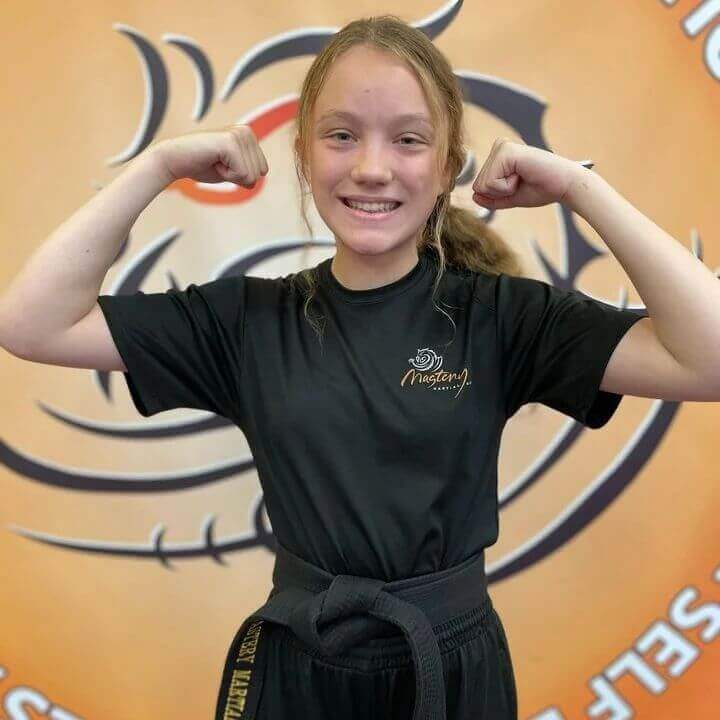
Kids ages 10 to 12 building real confidence through individual achievement in karate.
The Psychology Behind Individual Achievement
Psychologists who study child development talk a lot about something called “self-efficacy,” which is a child’s belief in their own ability to succeed. Research from the American Psychological Association shows that self-efficacy is one of the strongest predictors of long-term success in children. When a child accomplishes something through their own effort, that belief grows. When they feel like a passenger on someone else’s journey, it doesn’t. Martial arts is uniquely structured to build self-efficacy because every milestone, every stripe, and every belt promotion is a direct reflection of that individual child’s effort and growth.
How Karate and Team Sports Handle Failure Differently
In baseball, striking out can feel devastating when the whole team is relying on you. In soccer, missing a block can cost the game. The pressure not to let the team down can be overwhelming for young kids, especially those who are more sensitive or who are still developing their athletic skills.
In karate, failure is just a step in the learning process. If a child struggles to learn a new form, they don’t let anyone down. They just keep practicing. Our instructors are trained to help kids see mistakes as opportunities to grow, not as reasons to feel bad about themselves. We celebrate the effort, not just the perfection. This approach to failure is one of the most powerful things we teach, and it’s something kids take with them into every area of their lives.
Think about a child who has been told, even indirectly, that they aren’t good enough to play. Now think about what happens when that same child earns their first stripe on their white belt. They did that. Nobody helped them. That moment of personal victory is something a team sport bench rarely provides.
The Year-Round Consistency Advantage
Team sports are seasonal. Your child might play soccer in the fall, take the winter off, and then try baseball in the spring. This start-and-stop schedule makes it hard to build consistent habits and even harder to build lasting confidence. Every new season is essentially starting over.
Martial arts is a year-round practice. This consistency is where the real magic happens. Kids thrive on routine and structure. When they know they have class twice a week, every week, it becomes a natural part of their life. This steady rhythm helps them develop discipline that sticks, not just during the season, but all year long. The habits they build in the dojo carry over into how they approach homework, chores, and relationships.
After working with children in Troy for over 34 years, I can tell you with confidence that the kids who make the biggest leaps in confidence and character are the ones who train consistently over time. It’s not about intensity. It’s about showing up, week after week, and getting a little better each time.
The Social Skills Angle: Karate Builds Community Too
One of the most common concerns parents share with me is this: “But won’t my child miss out on learning teamwork if they do karate instead of a team sport?”
It’s a fair question, and the answer might surprise you. Karate classes are deeply social. Kids train alongside each other, encourage each other, and celebrate each other’s milestones. They learn to respect their partners during drills and to cheer for their classmates during belt tests. The difference is that the social connection in martial arts is built on mutual respect and shared growth, not on winning together or losing together.
In our kids karate program, we intentionally structure activities that build communication, leadership, and cooperation. Older students mentor younger ones. Kids learn to give and receive feedback. These are real-world social skills that transfer directly to the classroom and to life at home.
The Time and Cost Reality for Troy Families
Let’s be honest about what youth sports actually cost today. The Aspen Institute’s Project Play survey found that the average U.S. family spent $1,016 on their child’s primary sport in 2024, a 46 percent increase since 2019. Club hockey can easily run $2,500 or more per year. Club soccer averages over $900 annually. And those numbers don’t include the travel, the weekend tournaments, the unexpected gear costs, and the time commitment that can take over your entire family’s schedule.
Martial arts offers a much more predictable commitment. You know exactly when classes are, and there are no surprise weekend tournaments hours away from home. It gives your child a high-quality physical and mental outlet without turning your family’s calendar into a logistical puzzle. For parents who are already stretched thin, that predictability is worth a lot.
A Quick Side-by-Side Comparison
| Factor | Team Sports | Kids Karate |
|---|---|---|
| Playing time guaranteed | No, depends on skill level | Yes, every child trains every class |
| Individual achievement recognized | Often overshadowed by team results | Every belt and stripe is personal |
| Year-round consistency | Seasonal, with gaps | Year-round, consistent schedule |
| How failure is handled | Can feel public and high-pressure | Treated as a learning step |
| Average annual cost | $900 to $2,500 or more | Predictable monthly tuition |
| Social skills development | Teamwork and competition | Respect, leadership, and mentorship |
| Customized to your child | Rarely, if ever | Yes, with a Personal Power Plan |
The Personal Power Plan: A Differentiator Unlike Anything in Team Sports
At Mastery Martial Arts in Troy, we know that every child is unique. That is why we don’t use a one-size-fits-all approach. Every student who joins our family receives a customized Personal Power Plan.
Here is how it works. We sit down with you and your child to figure out exactly what you want to achieve. Do you want them to be more focused at school? Do you want them to speak up more at home? Do you want them to stop shutting down when things get hard? We build those specific goals into their martial arts training. It is a roadmap designed just for your child, and we track their progress every month so you can see the real changes happening.
No team sport offers anything like this. There is no soccer coach who is going to sit down with you and your child and create a personalized development plan based on your family’s specific goals. That level of individual attention is simply not possible in a team environment.
What the Personal Power Plan Looks Like in Practice
One parent came to us because her son was struggling with focus at school and was getting frustrated easily when he made mistakes. Within three months of training, his teacher reached out to ask what had changed. He was raising his hand in class, staying on task, and handling setbacks without melting down. That didn’t happen by accident. It happened because we knew his specific goals and built every class around helping him grow in those areas.
Another family enrolled their daughter because she was painfully shy and wouldn’t speak up for herself at school. By the time she tested for her first belt, she was bowing in front of the class, announcing her techniques out loud, and beaming with pride. Her parents cried. That is the kind of progress we are talking about.
Age-Specific Programs for Every Stage of Development
One of the things that sets our program apart is that we don’t put a 4-year-old and a 12-year-old in the same class and expect the same results. Our age-specific programs are designed to meet kids exactly where they are developmentally.
Our Little Dragons program for ages 3 to 6 focuses on building foundational skills like listening, following directions, and basic coordination. These are the building blocks of confidence at this stage. Our Kids Karate program for ages 7 to 9 introduces more structure, technique, and personal responsibility. And our Leaders program for ages 10 to 12 focuses on developing the leadership skills and emotional resilience that pre-teens need heading into the teen years.
Every program is kids-only. No adults training alongside your child. Every lesson, every activity, and every interaction is designed specifically for where your child is right now.
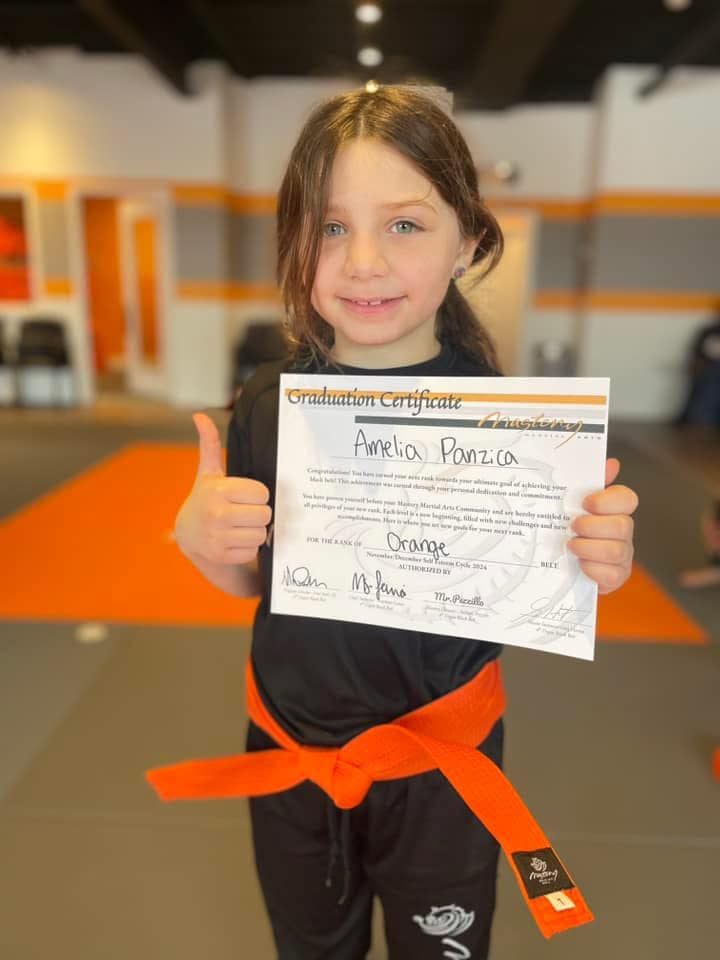
Every child deserves a place where they feel capable, seen, and proud of their progress.
Karate vs Team Sports for Kids: So Which One Is Right for Your Child?
Here is the honest answer: team sports are not bad. They teach real skills and can be a wonderful experience for the right child in the right environment. If your child is thriving on the field, getting plenty of playing time, and coming home feeling good about themselves, that is fantastic.
But if your child is sitting on the bench more than they are playing, if they are coming home feeling defeated, if they are struggling with confidence or focus or handling failure, then karate might be exactly what they need. It is not a consolation prize. It is a different kind of development, one that is built around the individual child rather than the team’s performance.
And here is something worth considering: karate and team sports are not mutually exclusive. Many of our students also play soccer or baseball. They tell us that the focus, discipline, and confidence they build in karate actually makes them better athletes on the field. The skills transfer.
Practical Steps You Can Take Today
If your child is struggling with confidence or behavior right now, you don’t have to wait for a new season to start making changes. Here are a few low-effort strategies you can try at home while you explore your options.
First, praise the effort, not the outcome. Instead of saying “Great job getting an A,” try saying, “I am so proud of how hard you studied for that test.” This small shift teaches kids that their effort is what matters, not just the result.
Second, give them small, manageable responsibilities. Let them be in charge of setting the table or feeding the dog. Completing small tasks builds a sense of capability and self-worth that is hard to manufacture any other way.
Third, create a consistent daily routine. Kids feel more secure when they know what to expect. Try to keep wake-up times, meals, and bedtimes as regular as possible. Predictability reduces anxiety and frees up mental energy for growth.
Structured activities like martial arts are not magic fixes. But they are powerful tools when combined with a supportive home environment. The consistency, the individual attention, and the built-in system for celebrating progress make a real difference over time.
Ready to See the Difference for Yourself?
If you are curious about whether karate might be a better fit for your child than the team sport they are currently in, or if you are just starting to explore options, we would love to help. We offer a free, no-pressure 1-on-1 introductory lesson where we get to know your child and you get to see our school firsthand.
You can learn more about our kids karate classes in Troy, MI and see how our Personal Power Plan can make a real difference for your family. We have been building confident, disciplined kids in this community for over 34 years, and we would be honored to do the same for yours.
Start your child’s transformation today.
Violet switched from gymnastics to Mastery — and her mom noticed the difference almost immediately. Read what changed for a 7-year-old who was picking up moves in gymnastics but not growing in confidence.
Where this fits
This article is one piece of our complete guide on how to build confidence in kids. Start there for the whole picture, then come back to the piece your child needs most.
Free Class · Troy, MI
See it for yourself.
Bring your child in for a free introductory lesson and 30 free days. No obligation to continue.
Get My Child’s Free 30-Day Pass →3656 Rochester Road, Troy · (248) 247-7353
For Parents
See our answers first on Google
Google now lets you choose the websites you trust most. The ones you choose move to the top of your search results. Add us, and our articles on focus, confidence, and bullying show up first, right when you’re looking for help. It takes ten seconds, and you can undo it anytime.
Make Us a Preferred SourceOpens Google. Tap the search box, then check the box next to “Mastery Martial Arts - Troy.”